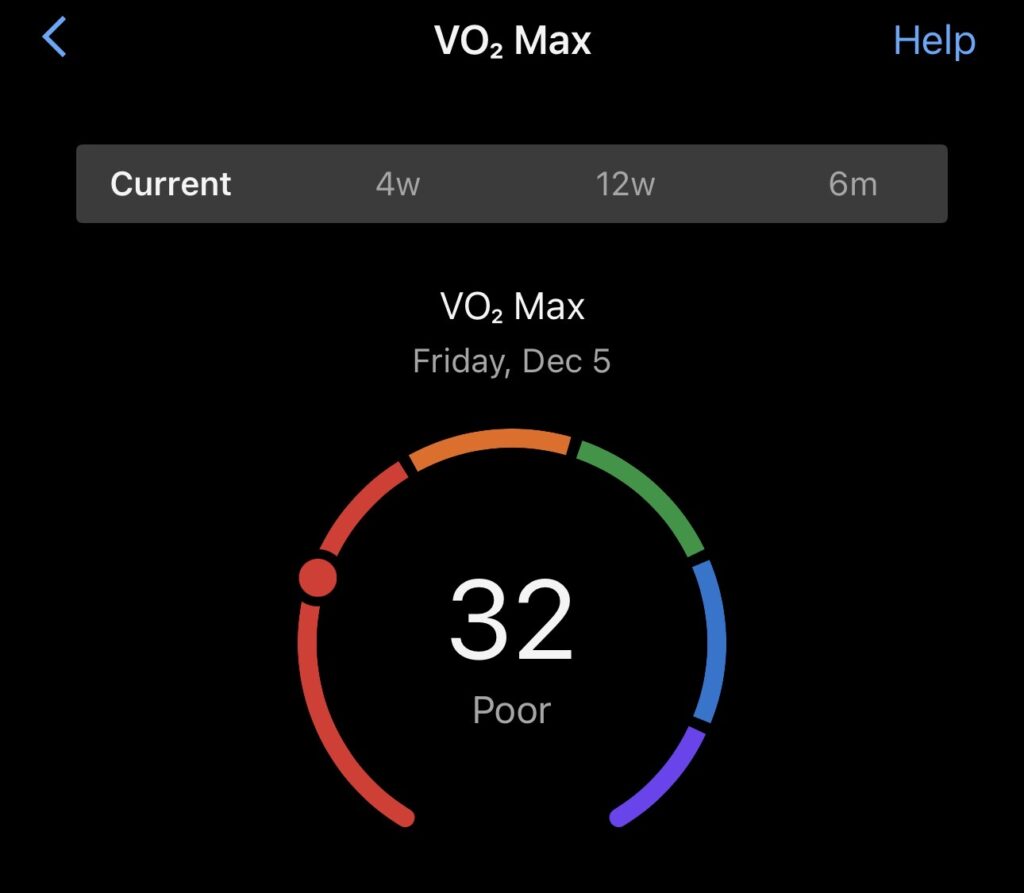
I need to vent for a minute. I work hard in the gym and I am a data nerd. I like toys and numbers but Garmin just pisses me off. I get why VO₂max matters and would love to track it (ideally without killing myself in a lab). What I am frustrated with is how Garmin handles it — especially if you don’t run. I hate running, my excuse is that I have a bum knee and toe (joint space narrowing and Hallux Rigidus).
I bike hard on a Wahoo KICKR. I row on a Concept2. I train consistently and hit high intensities regularly. Yet Garmin either won’t update my VO₂max or slaps a big “Poor” label on it. No “limited data” or even “below average” like my Apple Watch”. Just poor, because I’m not logging runs.
And it seems I’m not alone. There are a ton of Reddit threads from people doing plenty of cardio who get the same treatment:
- Garmin watch says VO₂max is “poor” no matter what they do
- Huge discrepancy between cycling and running VO₂max
- Massive difference between running VO₂ and cycling VO₂
- VO₂max cycling vs running discrepancy
VO₂max depends on the type of cardio. That’s not controversial. But Garmin still treats running as the default truth and everything else as second-rate. Which creates a dumb incentive: people start running (sometimes with bad knees or other issues) just to make their stupid app stop telling them they’re “poor.”
From a longevity perspective, that feels backwards. If joints become the bottleneck before cardiovascular capacity, which for many of us they do, chasing a running-based VO₂max score at the expense of knees, hips, or feet seems like a bad trade.
I’m not anti-VO₂max. I just hate being judged by an algorithm that treats one modality as morally superior.
Curious how you handle this:
- Ignore Garmin’s VO₂max entirely?
- Treat it as rough signal at best?
- Switch devices or metrics altogether?