

I read a USA Today story this week about the rise of “biohacking,” and my first reaction was that it mostly got the vibe right. More wearables. More self-ordered labs. More biological-age tests. More longevity clinics. More guys showing up with a screen full of numbers and the feeling that they’re finally getting serious about their health. All of it promoted heavily on social media.
I get the appeal because I feel it too.
I read about Retatrutide and part of me thinks, am I watching the future show up in real time? I see the fancy BIA scales and think maybe I should have one in the house. I hear people talk about full-body MRI and there’s always that little voice that says, what if they catch something early that the rest of us miss?
I think more people should admit that part out loud.
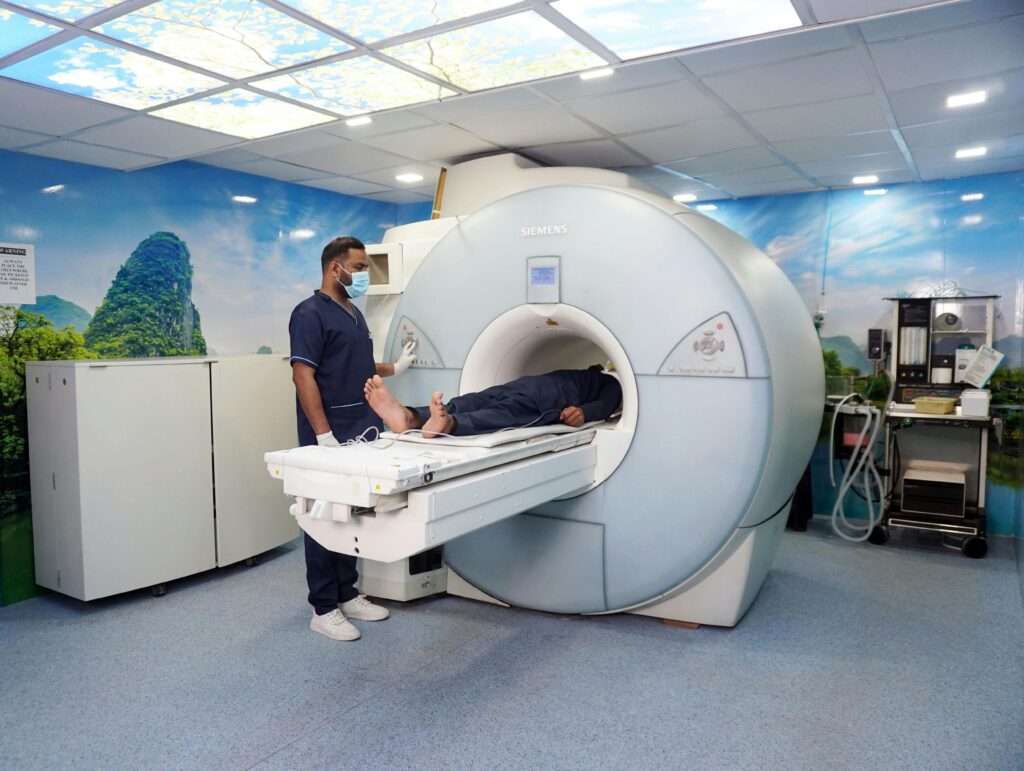
A lot of this stuff creates real health FOMO, especially once you’re old enough to know people with actual problems. It’s not always vanity. A lot of the time it’s fear. Or curiosity. Or just the very normal feeling that maybe the people doing more testing, more tracking, and more “optimizing” know something you don’t.
I’ve felt that pull too. But so far I’ve resisted most of it, mainly because I keep coming back to the same question: is this helping me do the obvious things better, or is it just giving me a more sophisticated way to worry?
Usually that clears things up pretty fast.
The older you get, the harder it is to coast. You wake up one day and your body starts creaking. Sleep gets a little worse. Your waist gets a little thicker. Your blood pressure is less forgiving. Recovery slows down. A friend has a heart scare. Another gets put on a statin. Somebody starts talking about testosterone. Somebody else is suddenly explaining their HRV to you over coffee.
None of that is weird. It’s just what happens when health stops feeling theoretical.
What bothers me is not the data itself. I like useful data. I think a blood pressure cuff is useful. I think step counts can be useful. I think sleep tracking can be useful for the right person. I think a lot of men would benefit from paying attention sooner instead of waiting until something breaks.
But “biohacking” has become a very generous term for two completely different things.
One version is just a grown man trying to get his act together. He starts lifting consistently. He walks more. He cleans up his diet. He cuts back on alcohol. He gets serious about sleep. He pays attention to his blood pressure. Maybe he uses a wearable to keep himself honest.
That version makes perfect sense to me.
The other version is a man with money buying himself the feeling of control.
That version is everywhere now too.
More tests. More scans. More supplements. More subscriptions. More treatments. More numbers to stare at. More ways to feel like you’re “working on your health” without actually doing the basic things that tend to matter most.
That’s where my patience starts to run out.
Because most men do not have an information problem. They have a consistency problem.
They do not need 160 biomarkers and complicated protocols. They need to lose some fat. They need to get stronger. They need to go to bed a little earlier. They need to walk every day. They need to stop drinking like they’re still 27. They need to keep doing the boring stuff long after the novelty wears off.
And that is exactly why the biohacking world is so tempting. The basics are repetitive. They are not sexy. Nobody feels special going for a walk after dinner or lifting three times a week for the next ten years.
Buying a new gadget feels more exciting. Running a big panel feels more serious. Booking a scan feels like you’re getting ahead of the problem. It feels proactive. It feels like action.
Sometimes it is.
Sometimes you’re just shopping.
That’s the part I think gets lost. A lot of this industry sells measurement like it’s the same thing as mastery. It sells access to information like access alone is going to change your life. It sells the feeling of discipline to people who don’t always want the reality of discipline.
To be fair, there’s a reason guys drift this way. Primary care can feel rushed, reactive, and thin. A lot of men do not feel coached. They feel processed. They get a quick visit, a few generic instructions, maybe a prescription, and then they’re back out the door. So I understand why a dashboard and a clinic talking about optimization can feel more satisfying than being told to eat better and exercise.
But that doesn’t magically turn weak ideas into strong ones.
It just means there’s a gap in the system, and plenty of people are happy to make money filling it.
So here’s the line I keep coming back to.
If a tool helps you follow through on proven healthy behavior, I’m for it.
If it mostly adds cost, complexity, and anxiety, I’m not.
That’s how I think about wearables. That’s how I think about extra testing. That’s how I think about supplements. That’s how I think about most of the flashy longevity stuff being sold to middle-aged men who are scared of aging and would really like to believe there’s a cleaner, smarter, more elite path than just doing the basics really well.
Usually there isn’t.
Usually the answer is still painfully ordinary.
Lift. Walk. Sleep. Eat like an adult. Keep your blood pressure under control. Stay on top of screening. Build a body that can still do things twenty years from now.
I’m not against experimentation. I’m not against curiosity. I’m not against using data to learn something useful.
I just think a lot of men use “optimization” to avoid the humbling truth that health is still mostly built the old-fashioned way.
Day by day. Meal by meal. Workout by workout. Year by year.
That’s less fun to sell. But it’s still the part that works.
Get the next one in your inbox
I write about longevity, training, and preventive health weekly — without the guru worship. Free, no spam, unsubscribe whenever.
About Gunnar
Gunnar is 53. He lost about 170 pounds, trains in a garage gym, and writes DadStrengthDaily from personal experience, citing primary sources where he can. He also moderates r/ProactiveHealth. He is not a doctor, and nothing here is medical advice. Talk to your own doctor before acting on anything, especially GLP-1s, TRT, blood pressure, sleep apnea, and cancer screening.