
I have a sauna in my house and no cold plunge, and it turns out the evidence is lopsided in exactly that direction. One has long-term mortality data. The other has hype, mood, and soreness data. They are marketed as if they were the same thing.
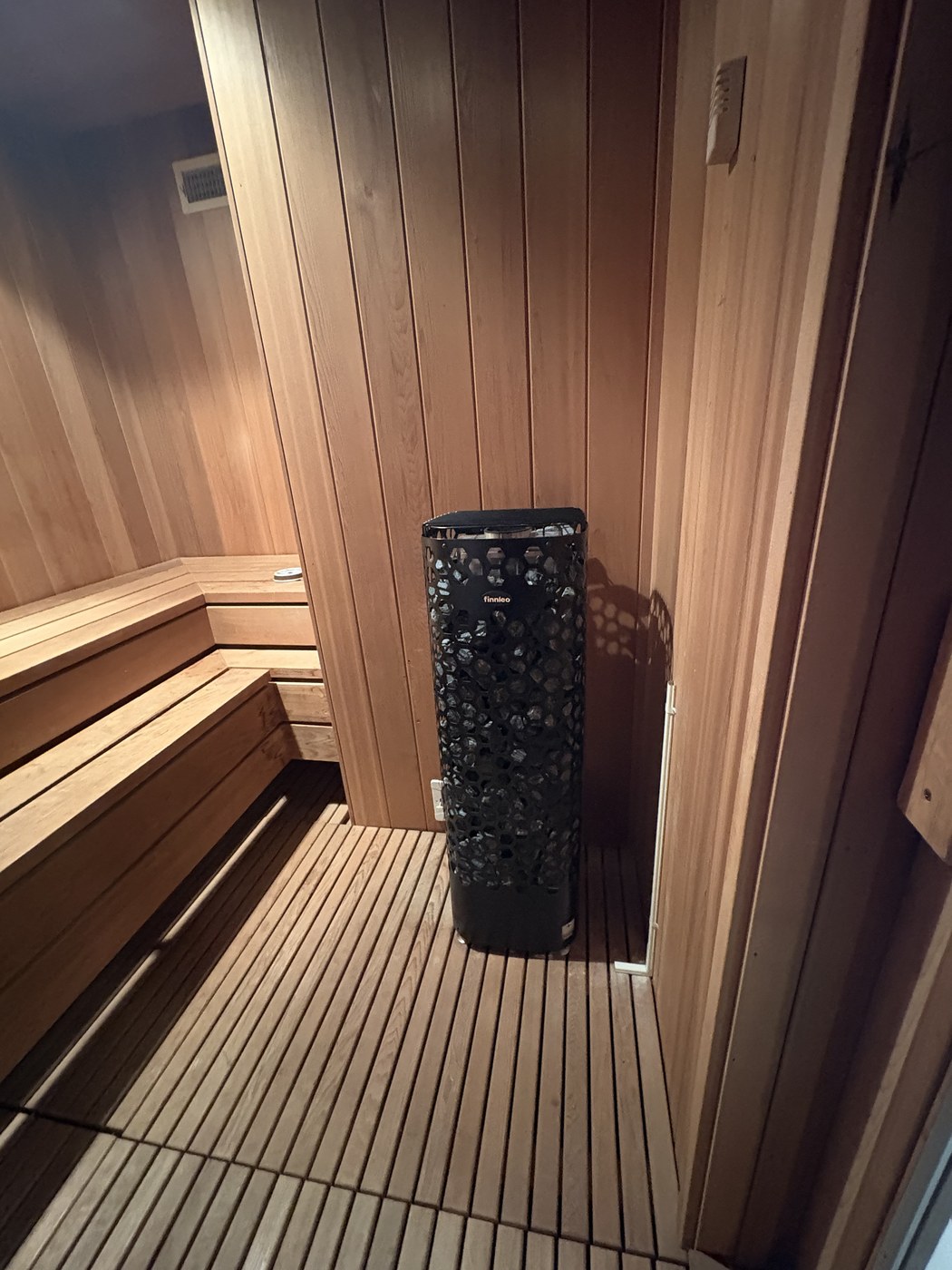
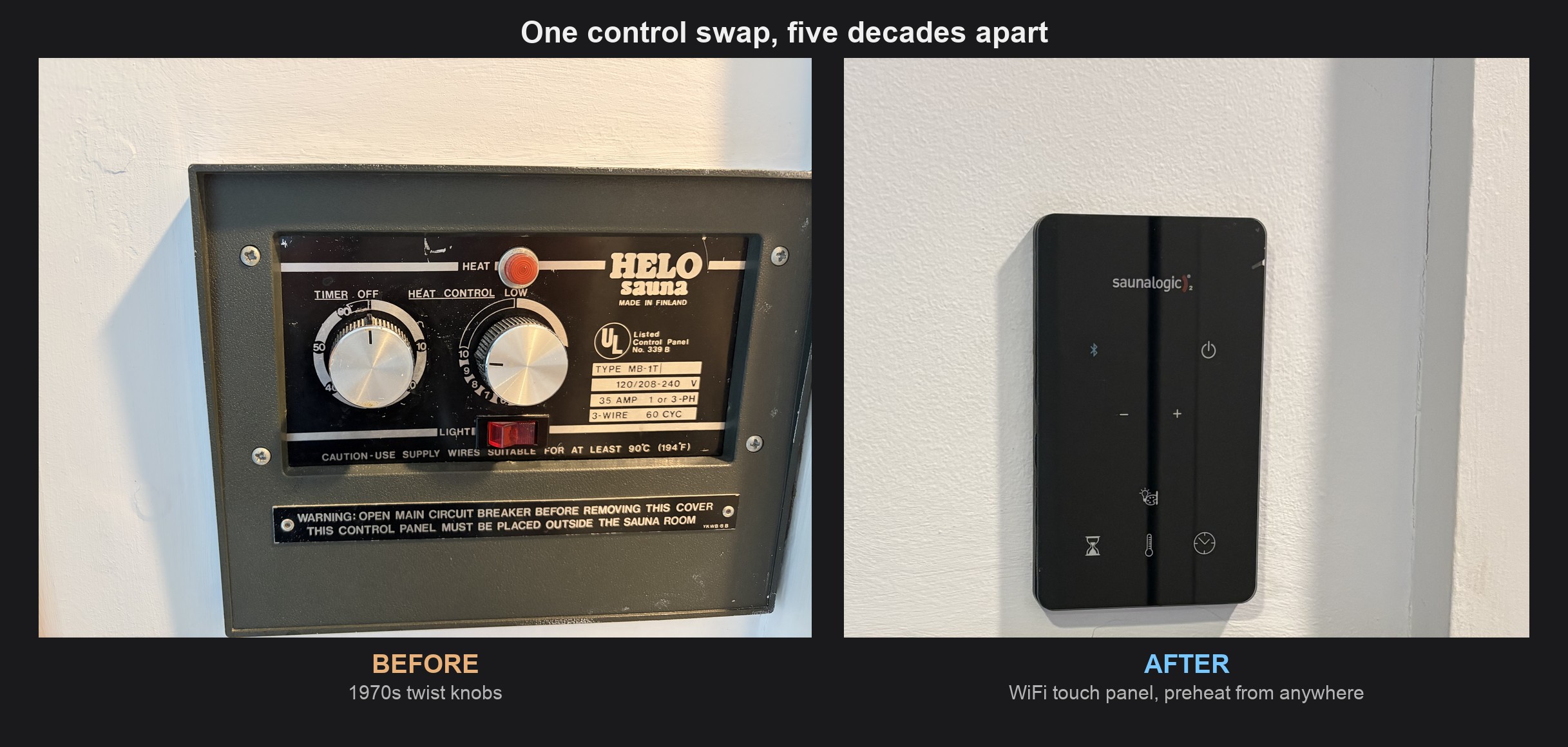
When we bought our house about ten years ago, it came with a sauna and a heater that looked like it had been installed sometime in the Carter administration. For most of those ten years I rarely used it. Little kids and a wood-paneled hot box do not mix, and the thing felt more like a quirk of the house than a tool I would ever use. It also took forever to heat up, because old sauna stones crack and crumble and choke the airflow. This year I finally replaced the whole setup. The old control was a pair of twist knobs straight out of Finland circa 1978. The new one is a WiFi panel I can start from bed or the gym, so the room is hot by the time I get to it. It is a real luxury to have a sauna in the house, and I was embarrassed at how little I had used it. Now I finally have both the equipment and the time to use it the way the people who study this actually recommend.
So I went looking for what the evidence says before I built a habit around it, and I had a personal reason to get it right. I have an aortic aneurysm that makes me cautious about anything that spikes my heart rate. Whether heat and cold help or hurt is not academic for me. What I found is that the wellness world has the story backwards. The cold plunge is the one everybody films and buys and talks about, and its hard-outcome evidence is thin. The sauna is the boring one sitting in the corner, and it is the one with decades of observational data linking frequent use to lower mortality. Neither claim is as clean as the internet makes it sound, so I want to hold both of them honestly.
What 2,300 Finnish men tell us about sauna
The backbone of the sauna case is a single long-running study of middle-aged men in eastern Finland, the Kuopio cohort, followed for around two decades. The headline from the 2015 paper in JAMA Internal Medicine is the one that gets quoted: men who used the sauna four to seven times a week had about a 40% lower rate of death from any cause than the once-a-week group, and a 63% lower rate of sudden cardiac death. The same cohort has since been tied to lower rates of fatal heart disease, dementia, and stroke in the frequent-sauna group, all in the same direction and all sizable.
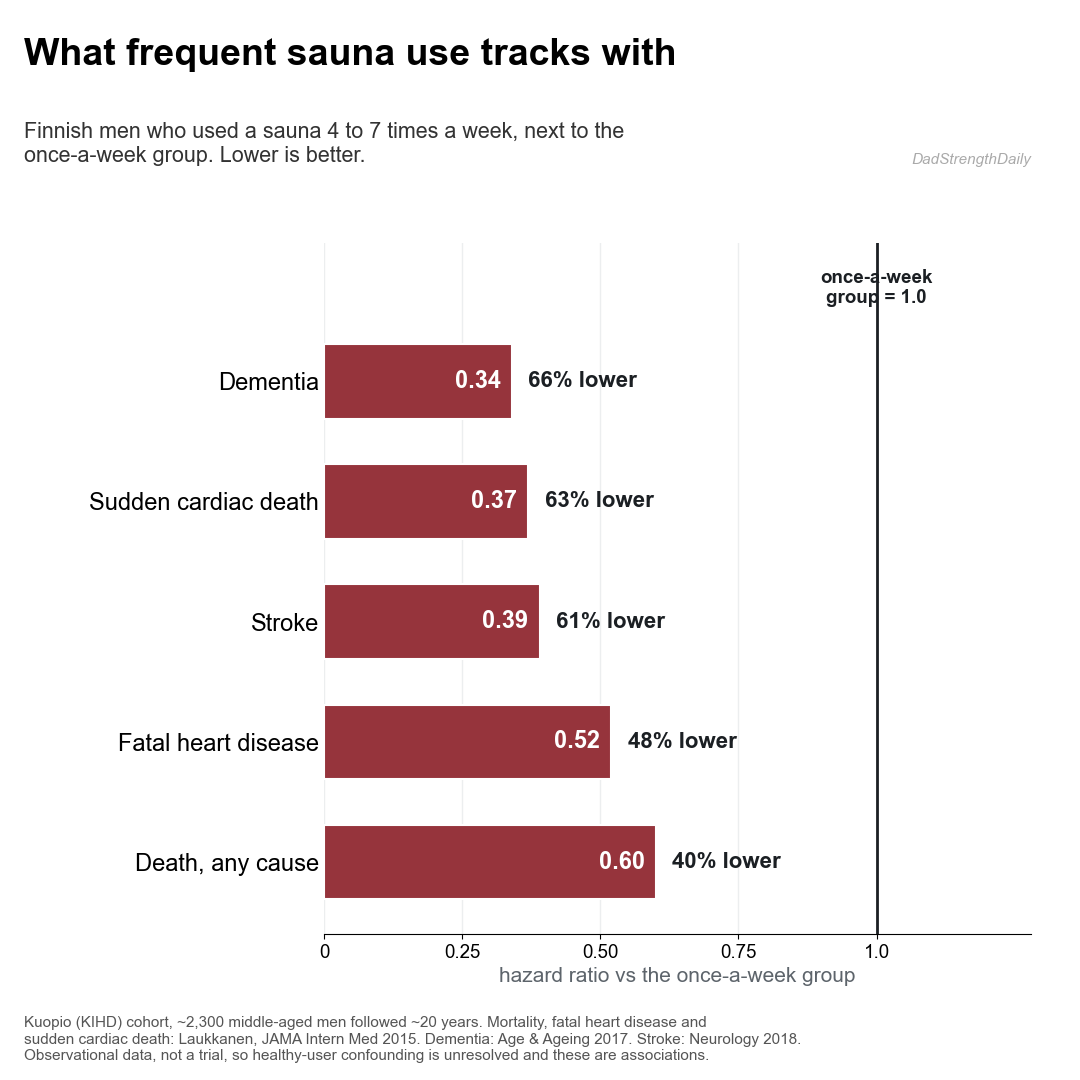
What made me take it more seriously was the dose response. The guys who used the sauna more tended to do better in a stepwise way, and longer sessions looked better than short ones. That does not prove the sauna caused anything, but it makes the finding harder to dismiss.
Then there is the catch, and it is a big one. This is observational data, not a trial. Nobody randomly assigned some men to sauna and others to sit in a warm room. In Finland almost everyone uses the sauna, so the people who skip it may be skipping it because they are already sick, and the people who go often may simply be healthier and more social to begin with. Saunas in Finland are where you see your friends, so the dementia and mood signal could be partly about company, not heat. It is the same question I had to work through on the cycling and dementia headlines. Peter Attia, who has written the most careful review of this literature I have found, keeps returning to that “healthy user” problem and concludes the true effect is probably smaller than the raw numbers suggest. His read, and mine, is that a real cardiovascular benefit is likely, but “40% lower mortality” is the ceiling, not the number to bank on.
Get the next one in your inbox
I write about longevity, training, and preventive health weekly — without the guru worship. Free, no spam, unsubscribe whenever.
The cold plunge’s real job is mood and next-day soreness
I do not own a cold plunge, and reading the evidence did not make me want one, but I want to be fair to it because it does have genuine uses. They are just narrower than the marketing.
The mood effect is real and it is dramatic in the short term. A 2000 study of cold water immersion measured a 530% jump in norepinephrine and a 250% rise in dopamine, and the effect lasted past the session. That is a legitimate neurochemical jolt, and it is why people climb out of an ice bath feeling switched on. Two catches, though. That study kept people immersed to the neck for a full hour in 57°F water, which is a different animal from the two or three minutes people actually spend in a backyard plunge, so do not read those numbers straight across. And those chemicals were measured in the blood, where they largely do not cross into the brain, so the path from cold skin to better mood is fuzzier than the enthusiasts admit. Mood is also the kind of thing you cannot run a blinded test on, since you always know whether you just sat in freezing water, so some of the benefit is expectation.
Soreness is the other one. A 2022 meta-analysis in Sports Medicine pooling 52 trials found that after hard exercise, cold water immersion reduces muscle soreness, improves how recovered you feel, and gives a real bump to next-day muscular power. What it did not help was strength recovery. So cold is a good tool if your goal is to feel and perform okay tomorrow during a tournament or a brutal training block, which is why ice baths are standard issue in NFL locker rooms and pro training rooms across sports. For an athlete who cares more about tomorrow than about adapting over the next twelve weeks, that is a real and useful trade. It is a mood and comfort intervention with a modest recovery role, not a longevity lever.
What it does not have is any hard-outcome data. A 2025 review in PLoS One looking at cold water immersion for health concluded that there are only a handful of trials, most of them small, and that nobody has run the long-term studies yet. There is no good human evidence yet that routine cold exposure lengthens life or lowers mortality, and the brown-fat weight-loss angle you have heard about is a rounding error in adults.
If you lift, the ice bath is taxing your gains
This is the part that decided it for me. I lift to hold onto muscle while I lose weight on a GLP-1, and even though I think the muscle-loss panic around these drugs is mostly overblown, I would still rather not actively work against the muscle I am building. A post-workout ice bath does exactly that.
Cold water immersion right after a strength workout blunts the muscle you build. The flagship study, a 2015 trial in the Journal of Physiology, had young men strength-train for twelve weeks, with one group sitting in cold water for ten minutes after each session and the other doing light active recovery. The active-recovery group gained roughly three times as much muscle by the study’s measure, and clearly more leg-press strength. These were young men, not fifty-year-olds on a GLP-1, so I would not over-read the exact multiplier. The direction is what I care about, and the direction is not subtle. A 2020 follow-up showed why, with muscle protein synthesis running about a quarter lower in the cooled leg, and it did not adapt away over two weeks. A 2021 meta-analysis in Sports Medicine and a 2024 review both land on the same direction: post-workout cold tends to work against muscle growth, especially when it becomes the regular post-lifting routine.
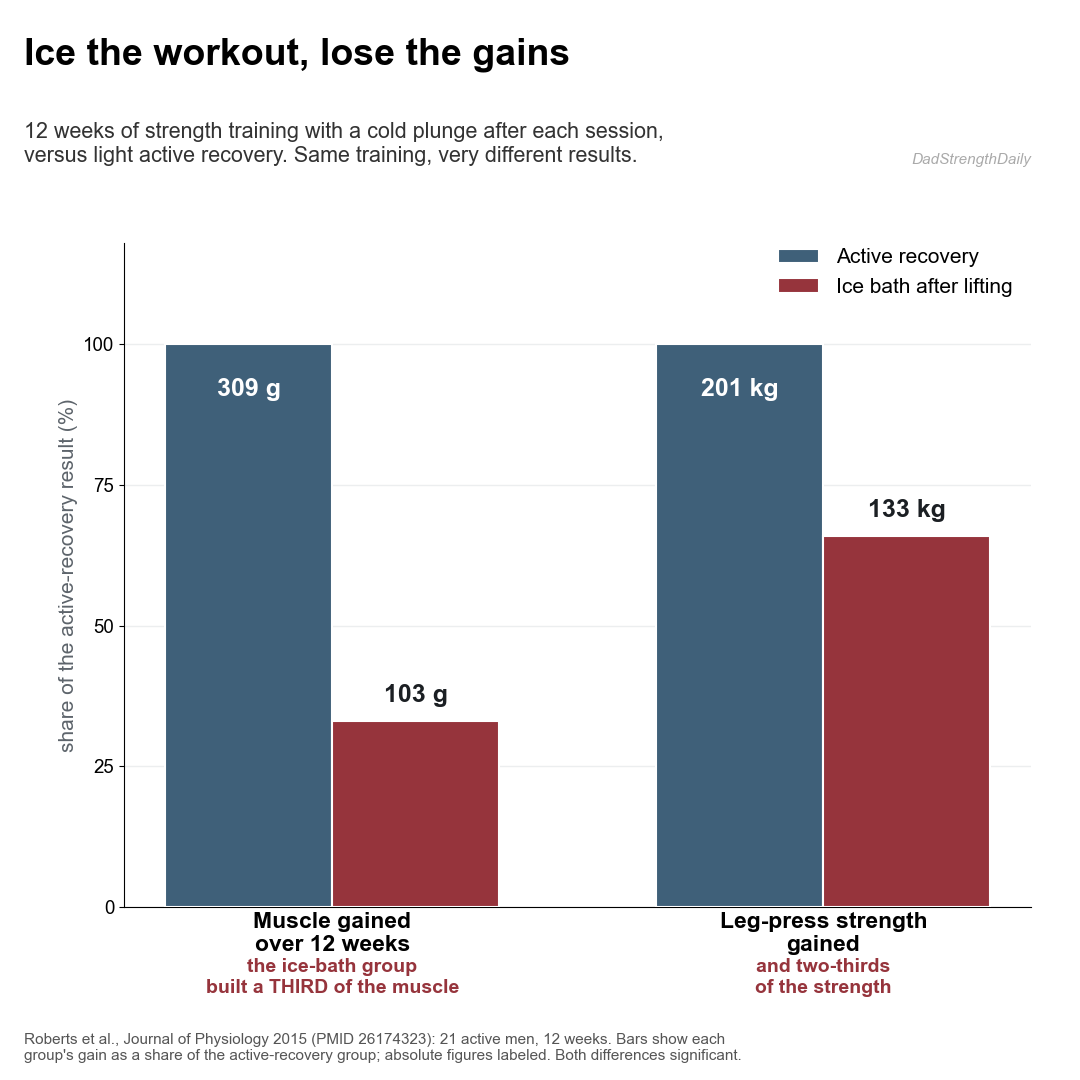
The reason is not the one people assume. It is not that cold “reduces inflammation and inflammation is bad.” It is that cold cuts blood flow to the muscle and dampens the signaling that tells the muscle to grow. And soreness relief and recovery are not the same thing, which is a point the strength coaches keep making. Cold makes you less sore, but less sore does not mean your squat is more recovered. Feeling better and building better are different questions.
Even the biggest cold advocates land on the same rule. Andrew Huberman and the sports scientist Andy Galpin, neither of whom is anti-cold, both tell people to keep it away from the lifting session. If the workout was about strength or size, do not plunge right after. Separate the cold from the lifting by several hours or do it on a different day. Exactly how long a gap you need is one thing the research has not pinned down.
What I am actually going to do, and what my aorta has to say about it
My plan is unglamorous. Sauna most days, twenty minutes or more, hot, the way the Finnish data point. Cold stays off my list, not because it is useless but because its best uses, mood and soreness, are not what I need, and its one clear downside, blunted muscle, hits exactly what I am trying to build. If I wanted the mood hit I would take a cold shower and not overthink it.
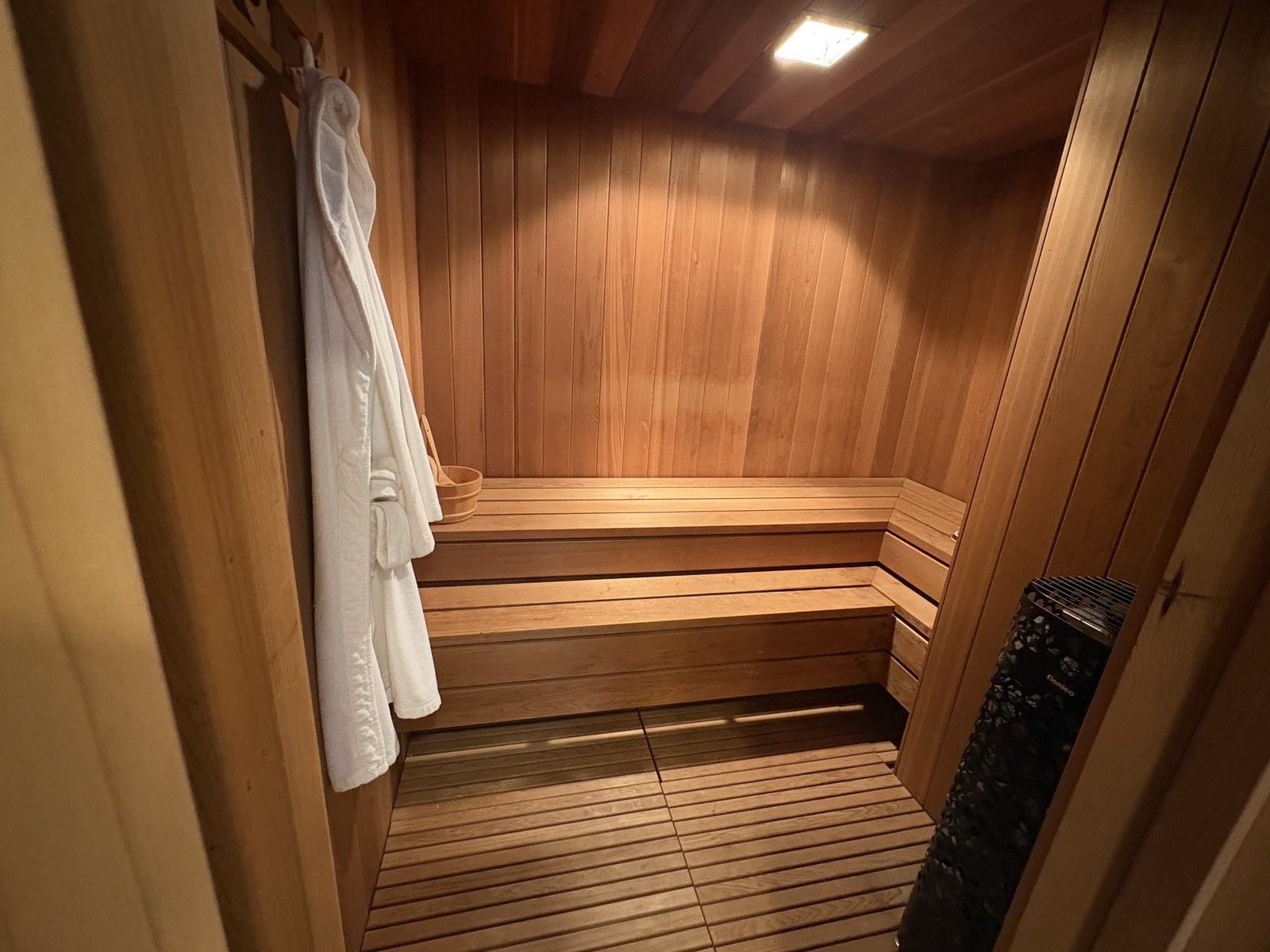
There is one caution I take seriously, and it is personal. I have an ascending aortic aneurysm, and I am deliberately careful about anything that spikes my heart rate or blood pressure. A sauna does both in the moment. Your heart rate climbs to 100-150 beats a minute, roughly like moderate exercise, and even though the heat widens your blood vessels, your systolic pressure still rises during a session, before any longer-term blood-pressure benefit that regular use may bring. The long-run picture for the sauna is cardioprotective, and that is reassuring. None of this is medical advice, and if you have heart disease, an aneurysm, uncontrolled blood pressure, a history of fainting, or an arrhythmia, clear heat or cold with your own doctor before you make either one a routine.
Two safety points that apply to everyone. Alcohol and the sauna are a genuinely dangerous pairing, responsible for a large share of the rare sauna deaths, so those do not mix. And on the cold side, the gasp reflex when you hit cold water is a real drowning and cardiac risk, which is why nobody should be doing cold immersion alone in open water.
The sauna and the cold plunge both sit downstream of the boring foundation. If your training is sloppy, your sleep is a mess, and your food is all over the place, heat and cold are side quests, interesting maybe, but still side quests. I finally have a working sauna and the time to use it, and I am glad the evidence happens to favor the one I own. But if I had to choose between fixing my sleep and buying a hot box, the sleep wins every time, and it is not close.
Recovery only counts if there is something to recover from. The work you are recovering from is in the guide.
About Gunnar
Gunnar is 53. He lost about 170 pounds, trains in a garage gym, and writes DadStrengthDaily from personal experience, citing primary sources where he can. He also moderates r/ProactiveHealth. He is not a doctor, and nothing here is medical advice. Talk to your own doctor before acting on anything, especially GLP-1s, TRT, blood pressure, and prostate or cancer screening.