Strength and Conditioning After 50
How much lifting is actually enough, the cardio half almost nobody counts, and what holds up when you start at 50 after decades off. Training dose, protein, VO2 max, recovery, and what my own numbers did.
By Gunnar · Patient experience, not medical advice · Updated August 2026
Where these numbers come from
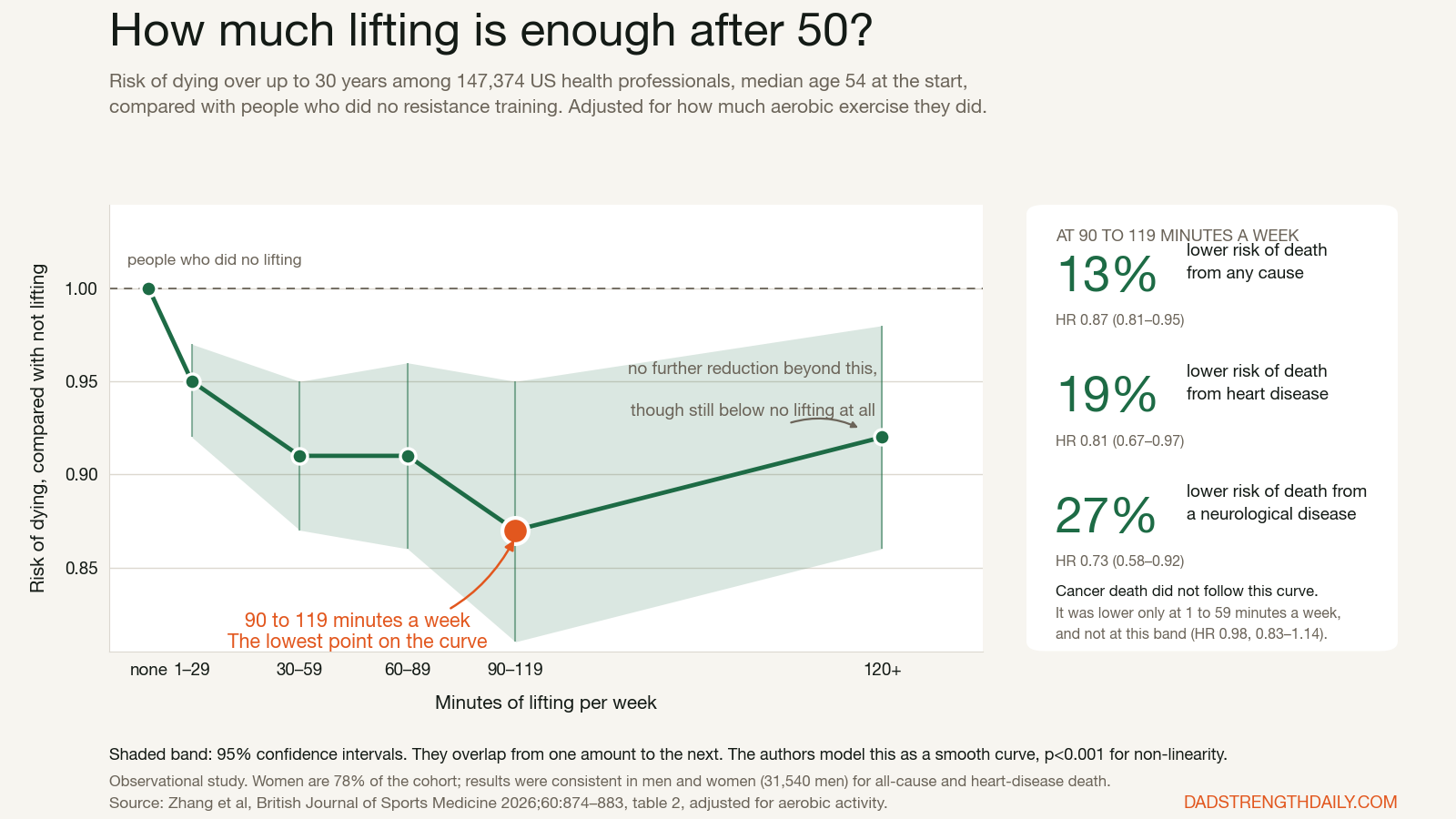
Every figure on this page comes from one paper: Zhang Y, Lee DH, Rezende LFM, Ma Y, Giovannucci E, “Long-term resistance training with all-cause and cause-specific mortality”, British Journal of Sports Medicine 2026;60:874–883. Using a single source keeps the numbers comparable with each other, which is not true of most exercise statistics you will see side by side.
| Lifting per week | Death from any cause | Heart disease | Neurological disease | Cancer |
|---|---|---|---|---|
| None | reference | reference | reference | reference |
| 1 to 29 min | 0.95 (0.92–0.97) | 0.99 (0.94–1.05) | 0.86 (0.80–0.93) | 0.91 (0.86–0.97) |
| 30 to 59 min | 0.91 (0.87–0.95) | 0.95 (0.87–1.04) | 0.83 (0.73–0.93) | 0.88 (0.81–0.97) |
| 60 to 89 min | 0.91 (0.86–0.96) | 0.94 (0.84–1.06) | 0.77 (0.65–0.90) | 1.00 (0.89–1.11) |
| 90 to 119 min | 0.87 (0.81–0.95) | 0.81 (0.67–0.97) | 0.73 (0.58–0.92) | 0.98 (0.83–1.14) |
| 120 min or more | 0.92 (0.86–0.98) | 0.86 (0.75–1.00) | 0.78 (0.65–0.94) | 0.96 (0.85–1.09) |
| Cardio and lifting together | None | 1–59 min | 60–119 min | 120+ min |
|---|---|---|---|---|
| Below the guideline (under 7.5 MET-h) | reference | 0.93 (0.88–0.97) | 0.89 (0.76–1.05) | 0.97 (0.75–1.26) |
| About the guideline (7.5 to 15) | 0.74 (0.72–0.77) | 0.73 (0.70–0.76) | 0.70 (0.63–0.79) | 0.69 (0.57–0.84) |
| 2 to 4 times it (15 to 30) | 0.68 (0.65–0.70) | 0.62 (0.59–0.65) | 0.56 (0.52–0.61) | 0.61 (0.55–0.69) |
| 4 to 6 times it (30 to 45) | 0.63 (0.60–0.66) | 0.59 (0.56–0.62) | 0.55 (0.50–0.60) | 0.53 (0.46–0.61) |
| 6 times it or more (45+) | 0.57 (0.54–0.60) | 0.53 (0.50–0.56) | 0.57 (0.52–0.63) | 0.58 (0.52–0.64) |
What men over 50 should know
The strength half of the exercise guideline never comes with a time target. Your doctor says 150 minutes a week, and the official version uses brisk walking as its example, so most of us picture a few walks with the dog and check the box. The other half of that same guideline asks for muscle-strengthening on two or more days a week and then stops. No minutes, no sets, nothing you can count, which is probably why it is the first thing people drop. In one observational study the lowest death rate landed in the 90 to 119 minutes a week band, and the bands above it did no better. The confidence intervals for the neighbouring amounts overlap, so nobody has pinned down an exact dose. Worth knowing before you take the number personally: about four in five of the people in it were women, and while the direction held when the authors analysed the men separately, the minutes themselves come from a mostly female cohort. I use that band to plan my week.
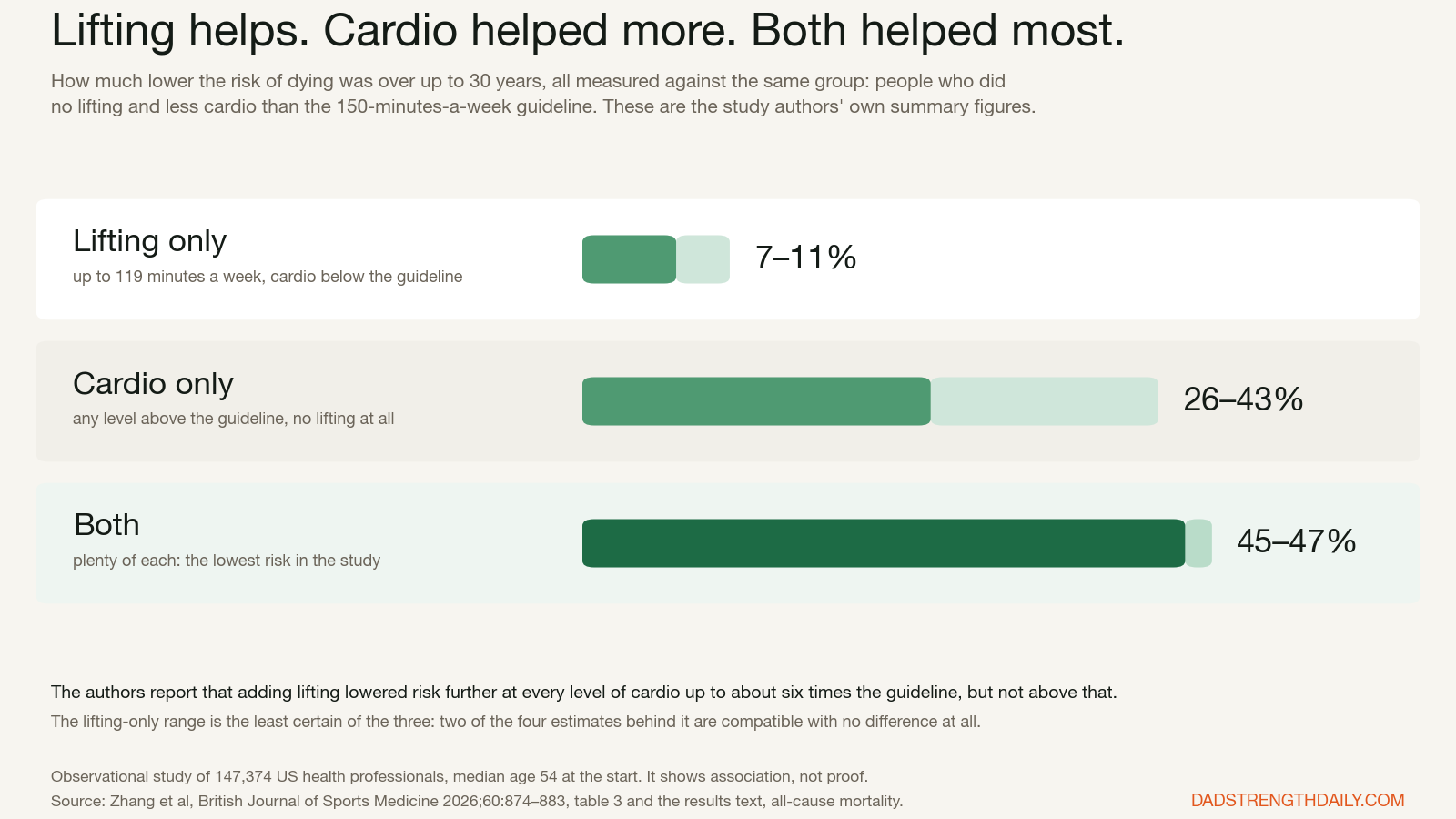
The cardio half did more of the work in this data, which is not the balance I expected. Start with the people who did no lifting and less cardio than the guideline. The ones who only lifted came out 7 to 11 percent lower. The ones who only did cardio, at any level above the guideline, came out 26 to 43 percent lower. That gap is wider than I would have guessed. The top of the lifting range is soft, too: its confidence interval includes no difference at all. The authors put it plainly, that either alone reduced risk but aerobic activity conferred greater benefit. Adding lifting on top helped further at most levels of cardio, though not in the highest group, where the trend was not significant. Their conclusion is to do both. Mine is that time is the constraint, not preference, and I often do not have enough of it for both.
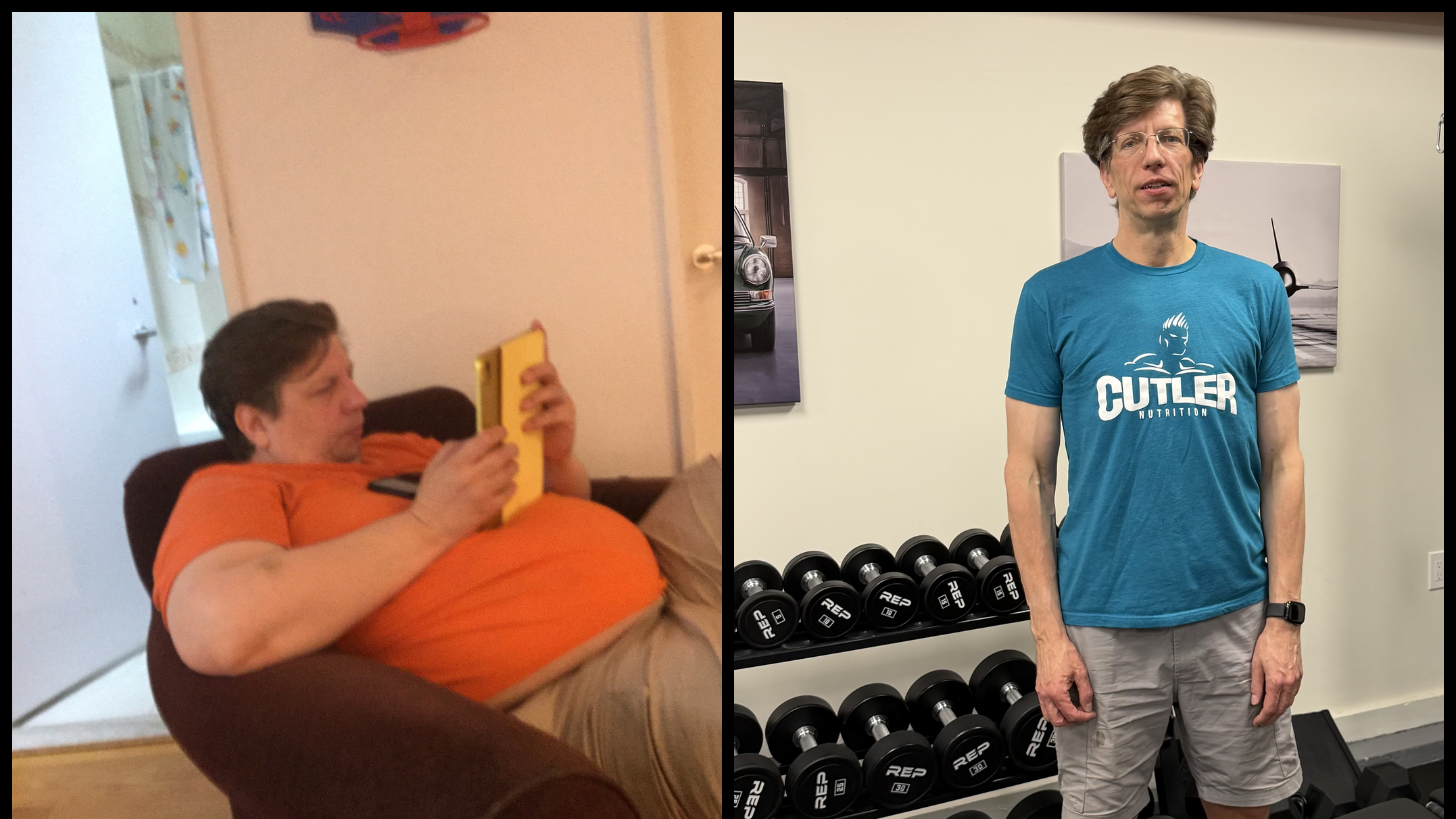
I started lifting at 50, after about 30 years of doing nothing. That is the only credential I have here. I am not a coach, I do not sell programs, and most of what follows is me reading the research and then checking it against my own bloodwork and DEXA scans. Those scans are also why I am careful about the muscle-loss panic around weight-loss drugs. I lost about 170 pounds in total, and over one stretch of that the scans showed me 44 pounds of fat lighter and 9 pounds of muscle heavier, which is not supposed to be easy at this age, and was not.
Start here
- How I started lifting at 50
Thirty years of doing nothing, and the first few weeks that nearly ended it. - Building muscle after 50, without the bro-science
What actually drives growth when you are past the easy years. - The number your doctor skips: 90 minutes a week
The study behind the chart above, and why the strength half of the guideline has no dose attached. - Why you are losing muscle in your 50s
What sarcopenia is, how fast it moves, and the part of it you get a vote on.
The conditioning half
- What VO2 max actually is
For anyone who has been told a number and not what it measures. - It predicts longevity, just not the way podcasts say
An association with living longer, not the prediction the podcasts describe. - The Norwegian 4×4
The interval session with the most evidence behind it, and how it feels to do. - Told your fitness is “poor” because you do not run
Why a watch underrates you when your training is on a bike, and what to do about it.
Muscle, protein and what the scan says
- Losing 44 pounds of fat and gaining 9 of muscle at once
Body recomposition after 50, measured rather than guessed at. - The GLP-1 muscle-loss fear was overblown
It scared me into the gym anyway, which turned out to be the useful part. - How much protein it takes to hold on to muscle
The daily target, and why it gets harder to hit on a drug that kills your appetite. - Getting a DEXA scan
What the scan tells you that the bathroom scale cannot.
Recovery, and what is mostly hype
- Cold plunges got the hype, saunas got the evidence
One of these has outcome data behind it, and it is not the one on your feed. - What I take before I train, and what I skip
Caffeine after 50, including the part where it costs you sleep you cannot spare. - Raising testosterone without TRT
What sleep, training and body fat are worth before anyone reaches for a prescription. I take TRT, and I still think that order matters. - The 2.5-hour morning routine, start to finish
The full blueprint version: a 5:45 wake-up, hydration, the weigh-in, and the training block.
Latest in Strength & Conditioning
-
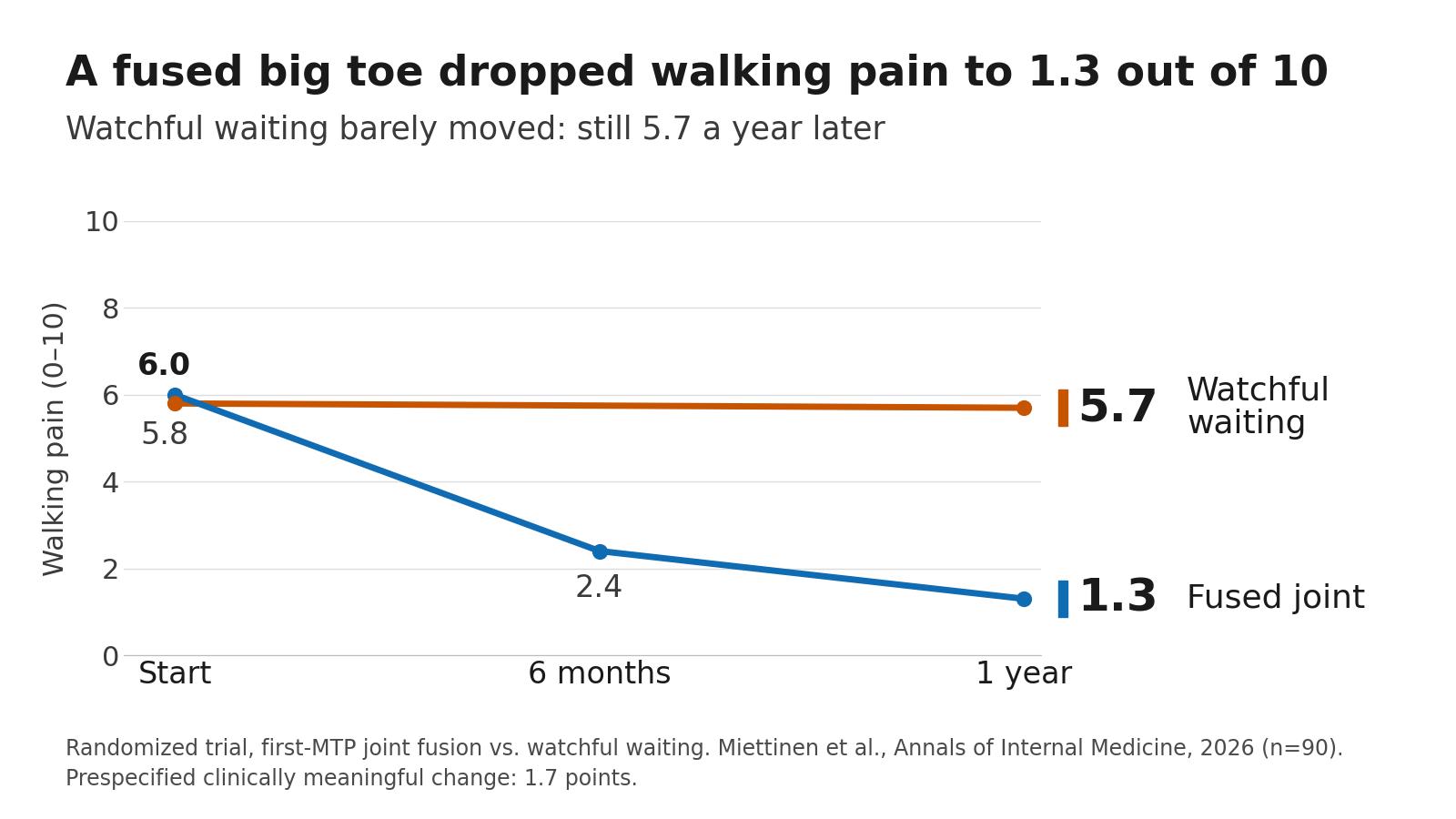
Big Toe Arthritis Surgery Won the First Real Trial. My Doctor Still Says Wait.
I’ve got severe big toe arthritis. The first real trial on big toe arthritis surgery beat waiting. My foot doctor…
-
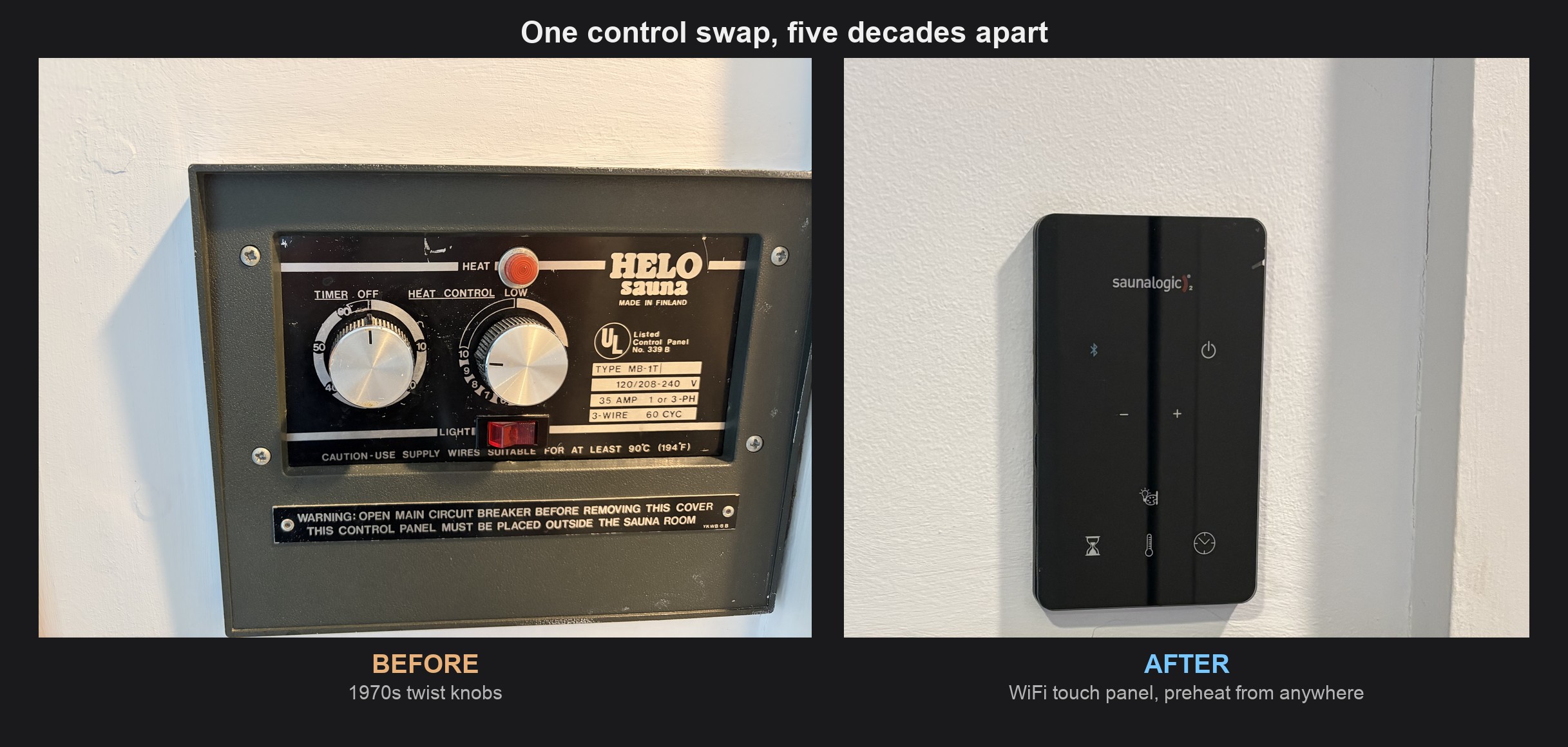
Cold Plunges Got the Hype. Saunas Got the Evidence.
Cold plunges get the attention, but the sauna is the one with decades of hard-outcome data. What the evidence actually…
-
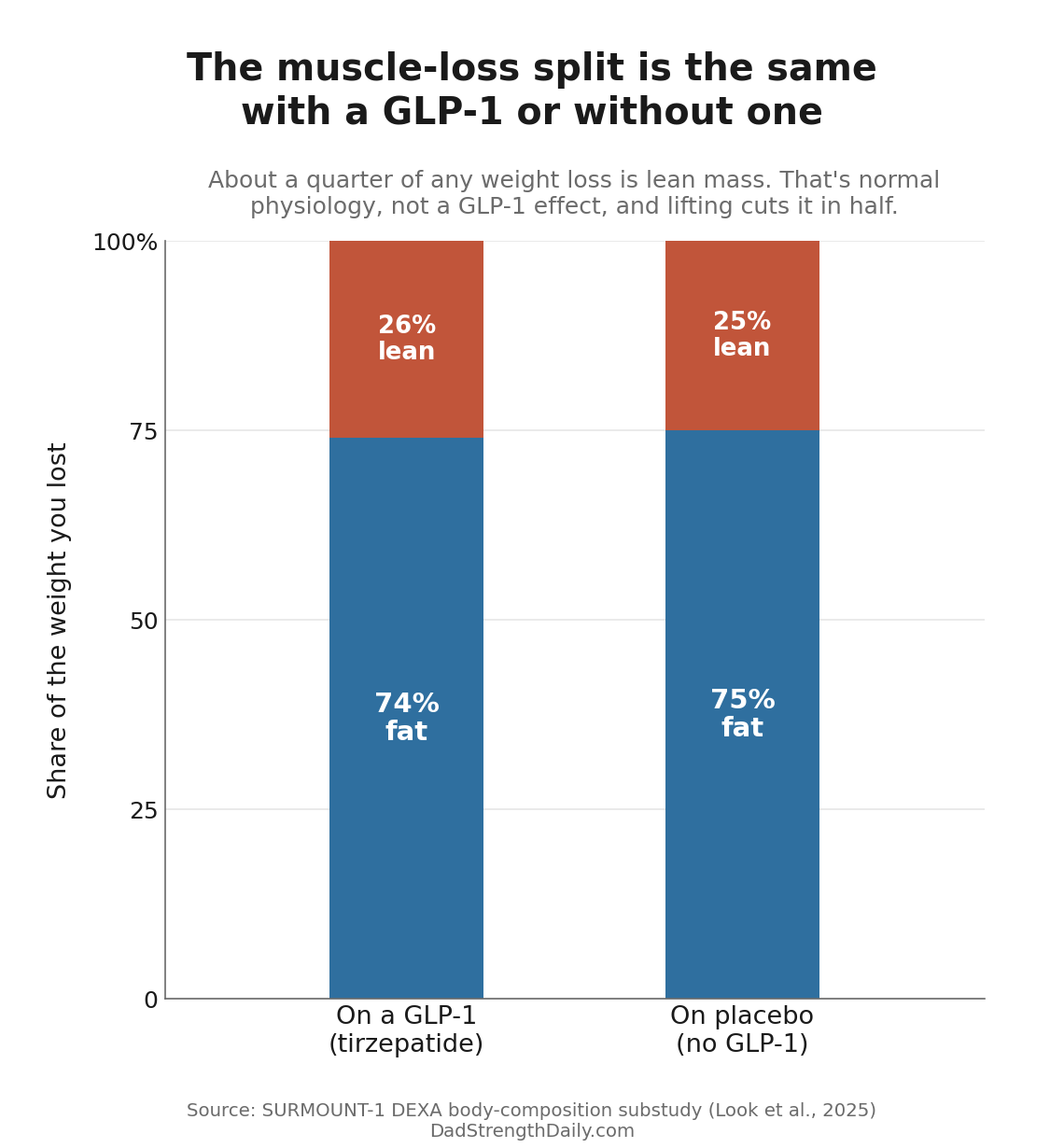
GLP-1 Muscle Loss Scared Me Into the Gym. The Fear Was Overblown.
The GLP-1 muscle loss panic scared me into training at 50. It turned out overblown, but the habit stuck. What…
-
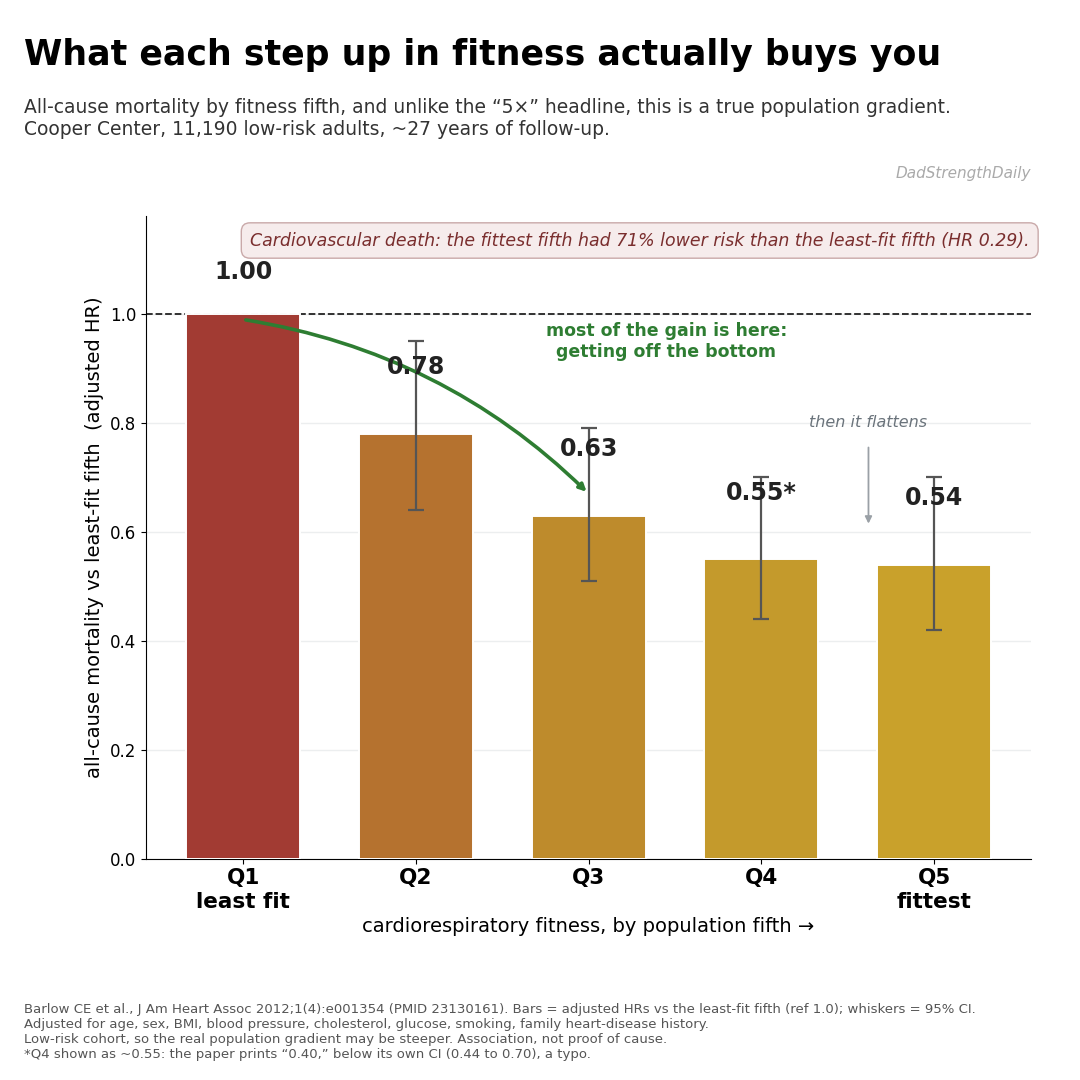
VO2 Max Predicts Longevity. Just Not the Way Podcasts Say It Does
The “five times the risk” number is real. The useful lesson for a fifty-year-old is smaller, less sexy, and more…
-
The Strength-Training Number Your Doctor Skips: 90 Minutes a Week
A 147,000-person, 30-year Harvard study gives a rough number for the strength-training half of the exercise guideline: around 90 to…
-
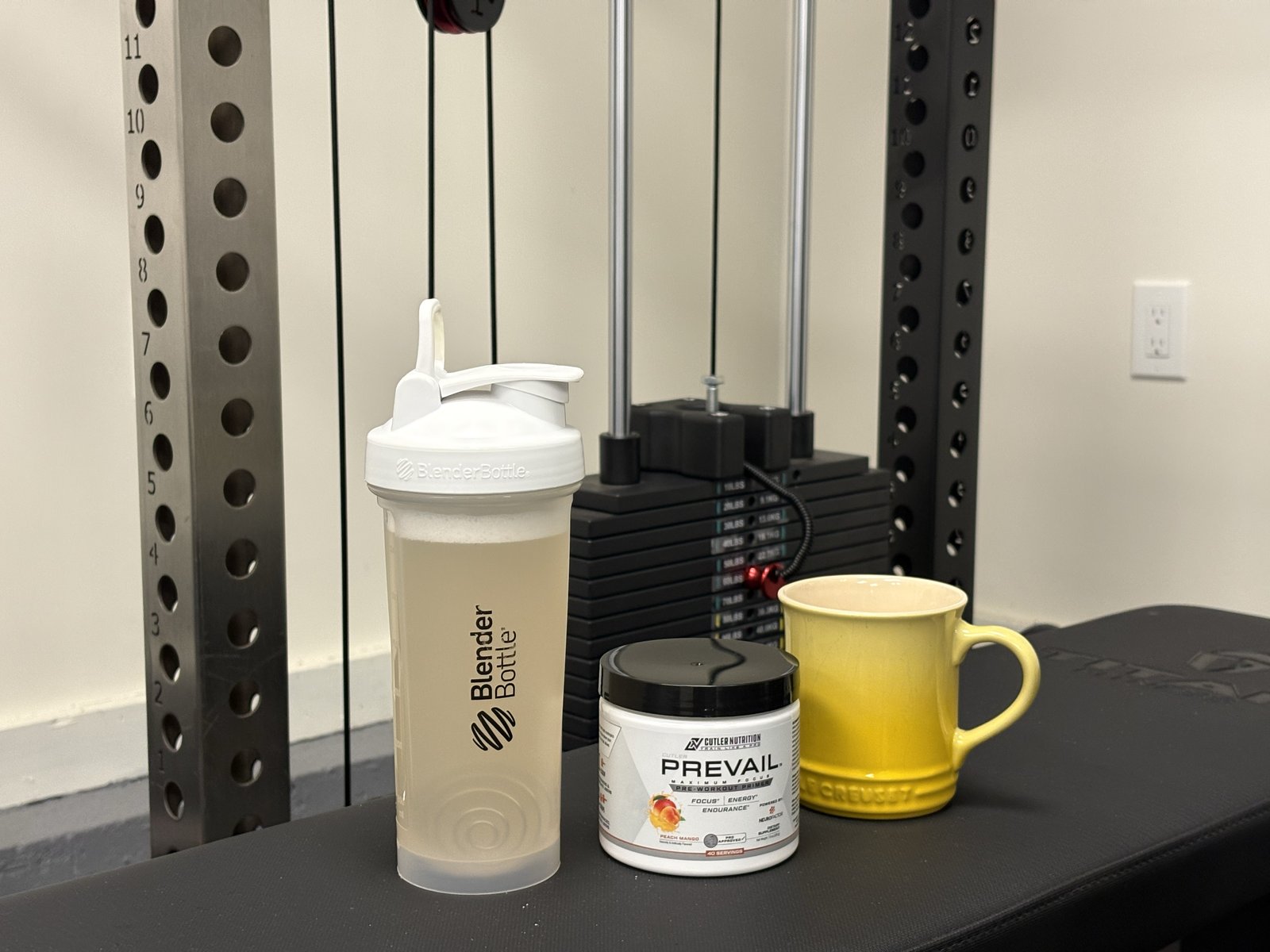
Caffeine After 50: What I Actually Take Before I Train, and What I Skip
Caffeine is the most-studied performance drug in sport, and it works, modestly. What matters after 50 is the dose, the…
-
A New Shot to Keep Your Muscle on GLP-1s. Does It Keep You Strong? Not Yet.
Updated September 17, 2026 with the FDA’s September approval of Isembyld (apitegromab), the trial numbers behind it, the fracture and…