
Preventive Health for Men Over 50
The numbers worth tracking, which screenings have evidence behind them, and which expensive tests I decided to skip. Written by a patient who reads the guidelines, not a doctor who writes them.
By Gunnar · Patient experience, not medical advice · Updated August 2026
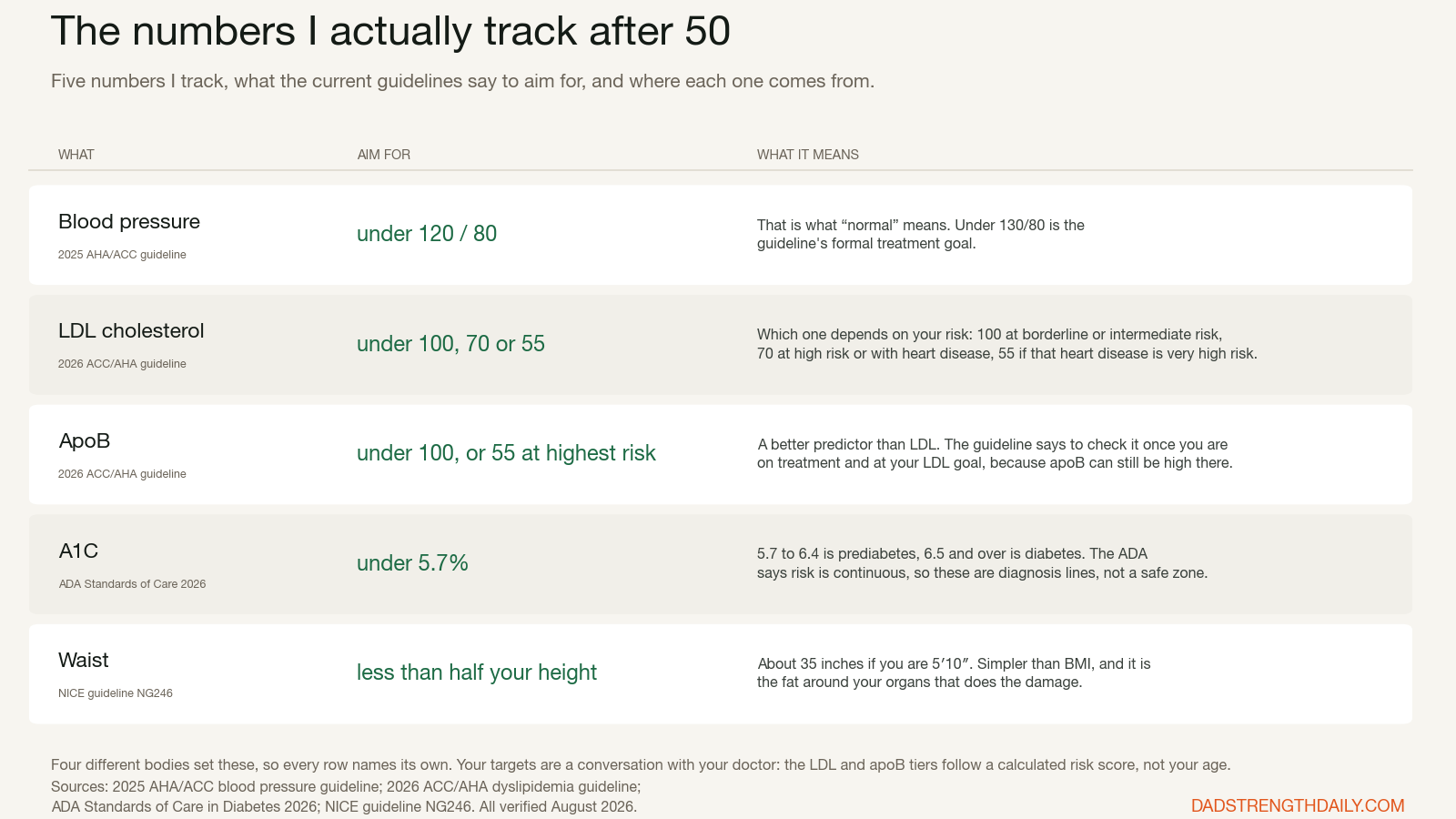
Where each of these numbers comes from
Unlike a single-trial chart, this one pulls from four different bodies, so each row names its own rather than pretending they are one set. All verified against the source documents in August 2026.
| Number | Source, and the exact wording |
|---|---|
| Blood pressure | 2025 AHA/ACC high blood pressure guideline. Normal is defined as under 120 and under 80, and that is the number this page tells you to aim for. The guideline’s formal treatment goal is the looser <130/80 mm Hg, with exceptions for people in institutional care, with limited life expectancy, or who are pregnant. So 130/80 is where the guideline says treatment has done its job, and 120/80 is the line it calls normal. Commentaries on the guideline describe it as encouraging people below 120/80 as well, but that is their characterisation and not wording I have been able to check in the guideline itself. Stage 1 hypertension is 130 to 139 or 80 to 89. |
| LDL cholesterol | 2026 ACC/AHA dyslipidemia guideline. Its goals come as pairs with non-HDL cholesterol: <100 (non-HDL <130) at borderline to intermediate risk, <70 (non-HDL <100) at high risk or with subclinical atherosclerosis, and <55 (non-HDL <85) for clinical ASCVD that is at very high risk. That last split is the one people get wrong: having heart disease does not automatically put you at 55. The guideline gives <70 to clinical ASCVD that is not very high risk, and defines very high risk as two or more major events, or one major event plus two or more high-risk features. |
| ApoB | 2026 ACC/AHA dyslipidemia guideline, which calls apoB measurement “reasonable” for adults already on lipid-lowering therapy, to guide further treatment once the LDL and non-HDL goals are met. It is a refinement test rather than a universal one, and the reason to bother is discordance: LDL can read at goal while apoB stays elevated. The two apoB goals stated in its recommendation text are <100 mg/dL alongside the LDL <100 goal, and <55 mg/dL at the severe and very-high-risk end once the LDL and non-HDL goals are met. |
| A1C | American Diabetes Association, Standards of Care in Diabetes—2026, section 2. Its table 2.2 defines prediabetes as A1C 5.7 to 6.4%, and table 2.1 diagnoses diabetes at A1C 6.5% or above on a lab test standardised to the reference assay. The ADA adds the part worth carrying: for all of these tests “risk is continuous, extending below the lower limit of the range”, so 5.6 is not a safe zone and these are the lines where a diagnosis starts, not treatment targets. Someone already diagnosed sets a different goal with their doctor. |
| Waist | NICE guideline NG246: keep your waist to less than half your height, a ratio under 0.5. It classifies 0.4 to 0.49 as healthy, 0.5 to 0.59 as increased and 0.6 or more as high central adiposity, for adults with a BMI under 35 of any sex or ethnicity, including people carrying a lot of muscle. |
What men over 50 should know
The measurable part of preventive health after 50 comes down to five numbers, and almost nobody hands you the list. I had to assemble mine from four different guidelines, which is a ridiculous amount of work for something this basic. The one that surprised me is blood pressure. Under 120 over 80 is what actually counts as normal, and it is what I aim for. The formal treatment goal in the 2025 guideline is the looser under 130 over 80. Two real numbers, constantly confused for each other, and the gap between them is where a lot of men sit and assume they are fine.
The boring numbers are the ones with the evidence, which is not how any of this gets sold. A blood pressure cuff costs almost nothing and it is the reason I take a pill every morning. A tape measure around your waist is simpler than BMI, and it tracks the fat that does the damage, and the rule is easy enough to remember: keep it under half your height. Meanwhile the things being advertised to men my age, the full-body MRI, the hundred-biomarker panel, the biological-age report, come with no target and no evidence that ordering them makes you healthier. I am not immune to wanting them. I have written about how fast that curiosity turns into shopping, and about the version that costs forty thousand dollars a year.
I am a patient here, not a clinician, and I track these because I got the bad version of the news first. My own cholesterol panel is the reason I care that apoB and LDL can disagree, and that the number your doctor quotes depends on a risk score rather than your birthday. The rest of this page is what I have read and checked: the screenings worth having, the ones that are genuinely your call, and the expensive tests I decided to skip. Where the evidence is thin I say so, because a test that finds something you would never have died from still gets you the biopsy, the scan, and the year of worrying.
Start here: the screening decisions
- The blood pressure guidelines changed a calculator, not the categories
What actually moved in 2025, and why most of the panic was aimed at the wrong thing. I take the pill, so I went and read it. - Colon screening added a blood test, and it is the one I would pick last
More options is not the same as equal options. Where the new blood draw actually sits against a colonoscopy. - I got Shingrix to avoid my wife’s misery
Then the dementia and cardiovascular data showed up. The clearest risk-benefit call I have made in years. - The lung-cancer blood test I am watching, not ordering
Fourteen proteins that show up years before a diagnosis, and the honest distance between that finding and a test you can use.
What you are being sold
- The $40,000 longevity membership, and the garage version
What the concierge tier actually buys you on top of the biology, which costs a few thousand a year. - The functional medicine empire
What it is, what it sells, and the specific points where it stops being your primary care doctor under a nicer brand. - At some point biohacking just becomes shopping
I feel the pull too. Where curiosity about your own body turns into a cart full of tests nobody has shown help. - NAD+: what the research actually says
One of the most heavily marketed supplements aimed at men our age, held against its own evidence.
Sleep, recovery and the daily inputs
- Sleep after 50: my data did not say what I thought it said
I pulled a year of my own numbers expecting a success story. Recomputing from the raw data took it away. - Cold plunges got the hype, saunas got the evidence
One of the two has long-term mortality data behind it, and it is not the one filling your feed. - Cycling and dementia risk: what the data actually says
A 22 percent headline, and the gap between what the study measured and what it was reported to mean. - The 2.5-hour morning routine, start to finish
The full blueprint version: a 5:45 wake-up, hydration, the weigh-in, and the training block.
Latest in Preventive Health
-
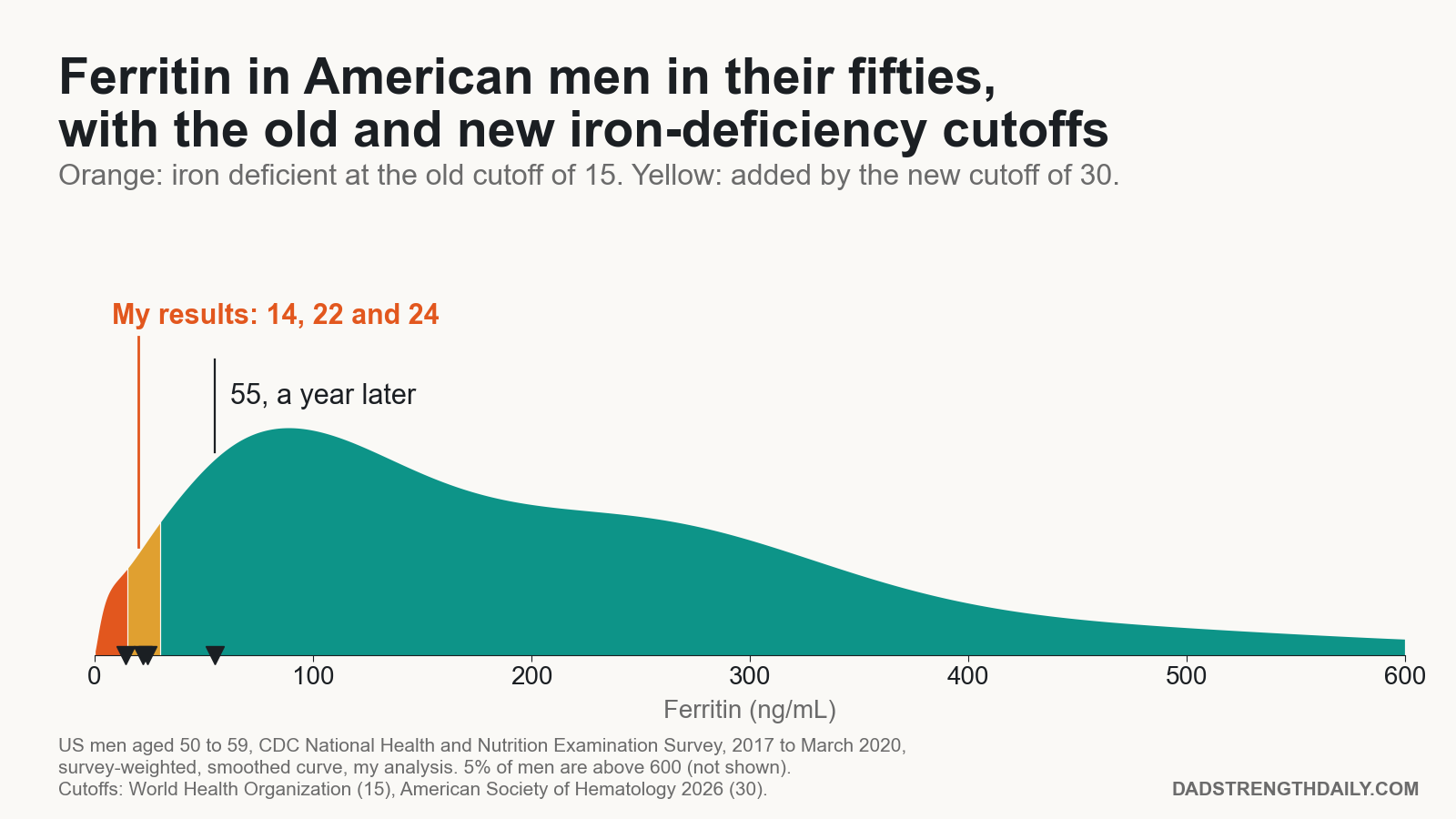
Low Ferritin in Men: A New Guideline Suggests a Cutoff of 30, Not 15
A new hematology guideline moves the ferritin cutoff for iron deficiency in adults from 15 to 30 ng/mL. What ferritin…
-
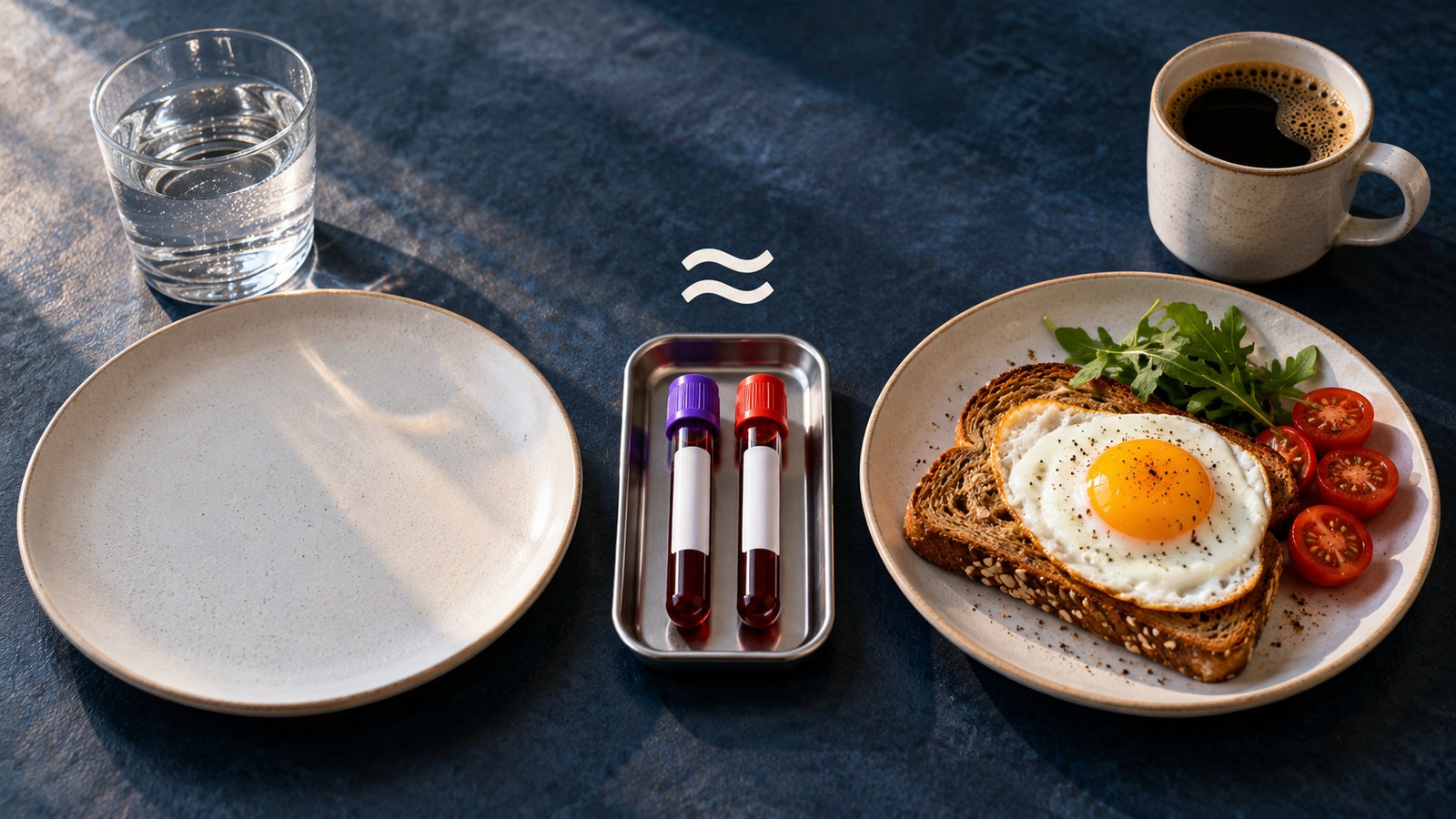
How Long to Fast Before a Blood Test? For Most Tests, It Barely Matters
How long to fast before a blood test: a JAMA Internal Medicine study of 101,148 patients found 8 hours covers…
-
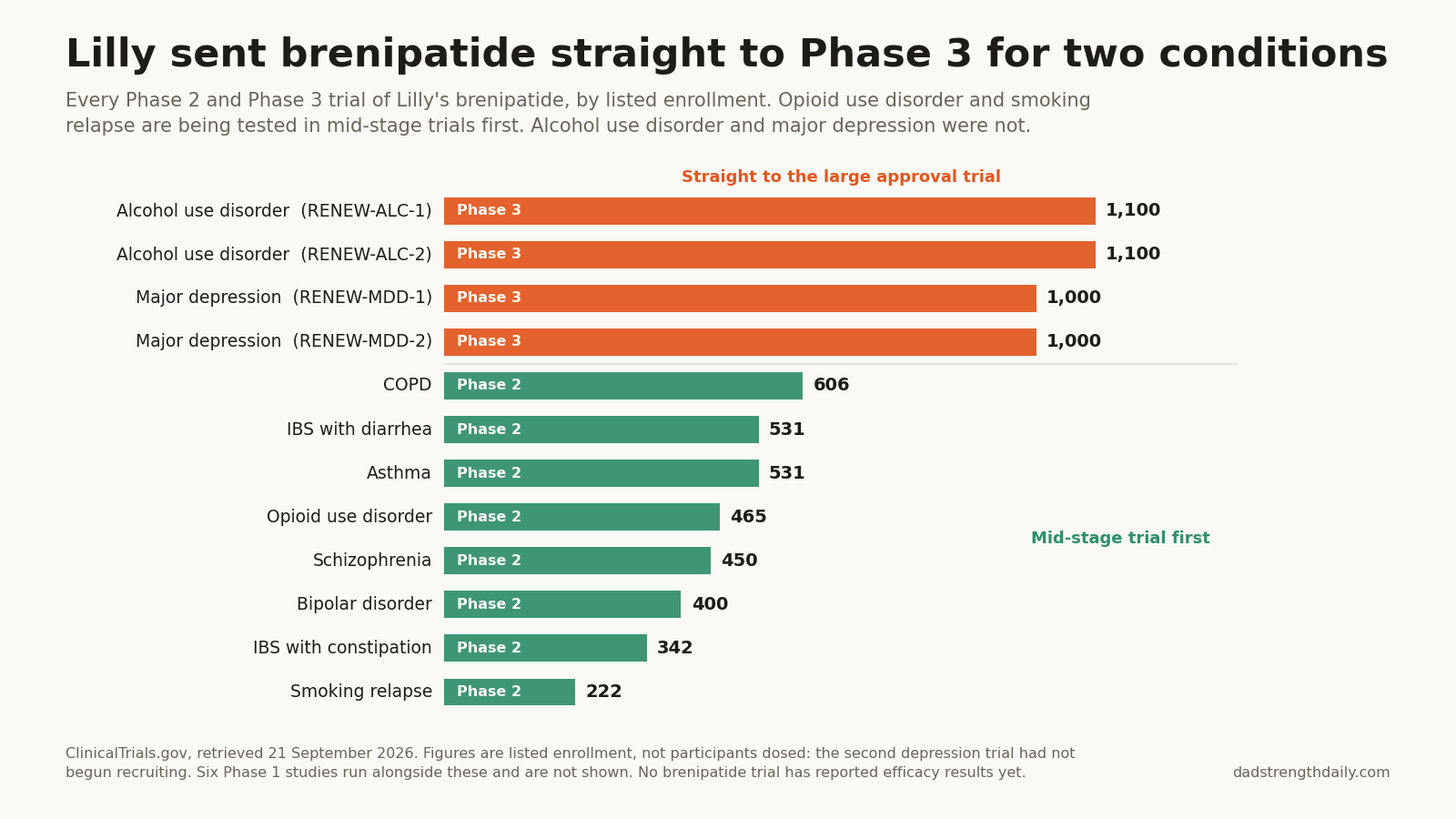
Lilly Accelerates Its Brenipatide Trials: Betting Millions on the First GLP-1 for Alcohol and Depression
The brenipatide Phase 3 program is Lilly’s bet that it can reach an alcohol and depression label before anyone else,…
-
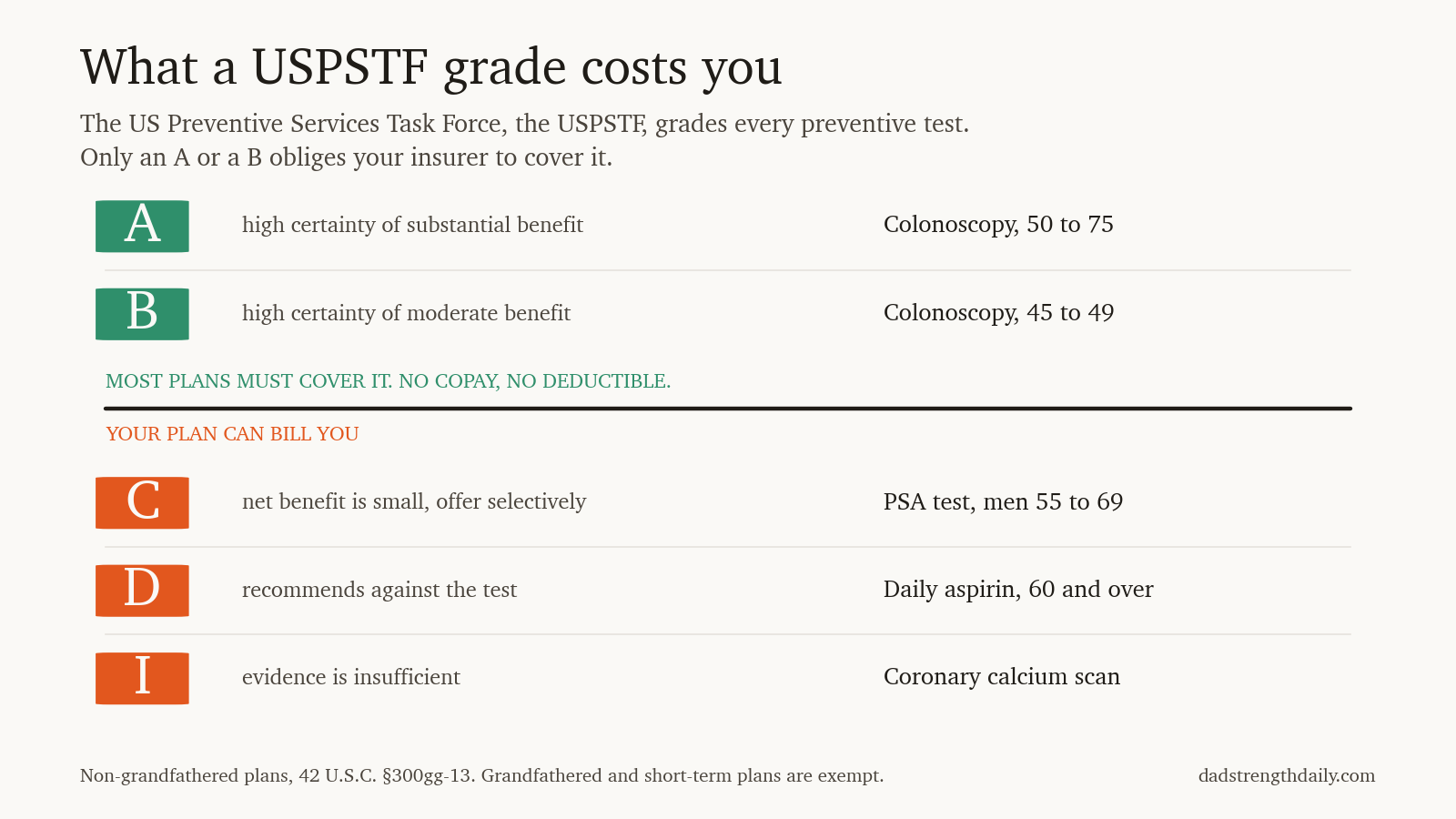
The panel that decides which of your screenings are free hasn’t met in 18 months
Only USPSTF grades A and B must be covered by most insurance plans at no cost. What that means for…
-
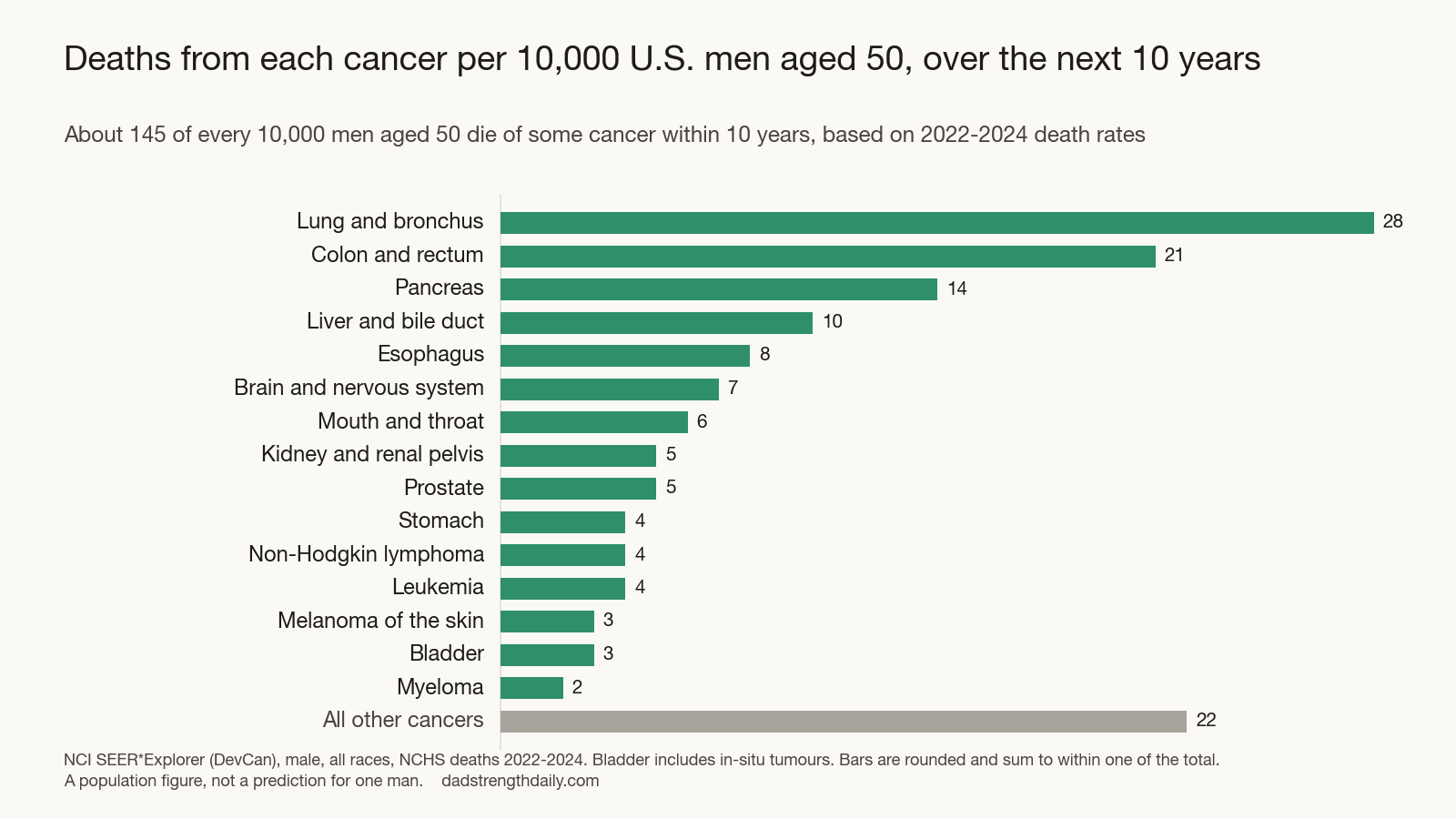
Cancer Risk by Age: What Happens to 10,000 Men at 50, 60, 70 and 80
Cancer risk by age, for men, with smoking, weight and alcohol toggles: out of 10,000 U.S. men aged 50, about…
-
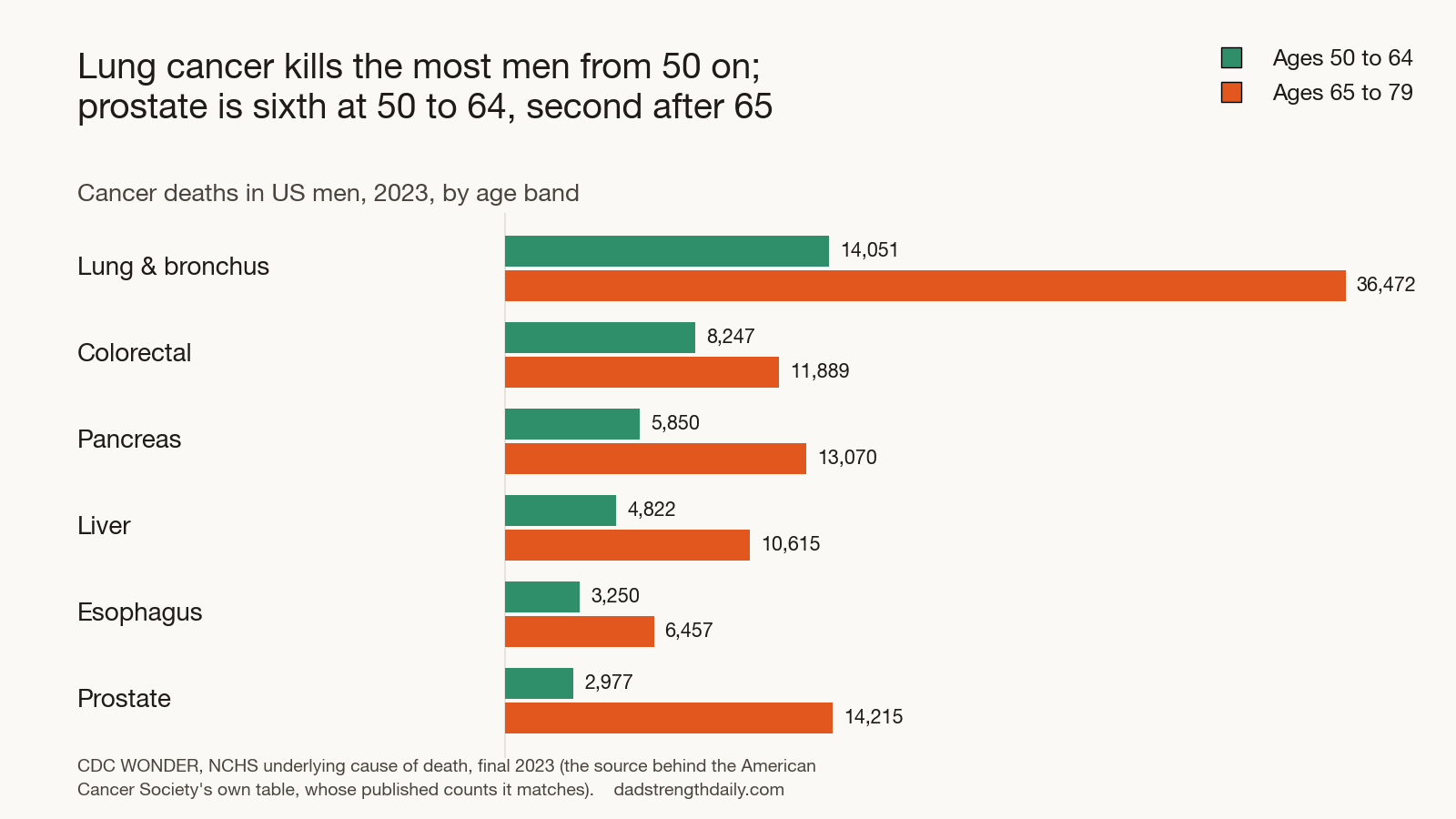
The Deadliest Cancers for Men Over 50 Are Not the Ones Men Worry About
Updated September 24, 2026 with the NHS-Galleri paper and the FDA panel vote. The deadliest cancers for men over 50,…
-
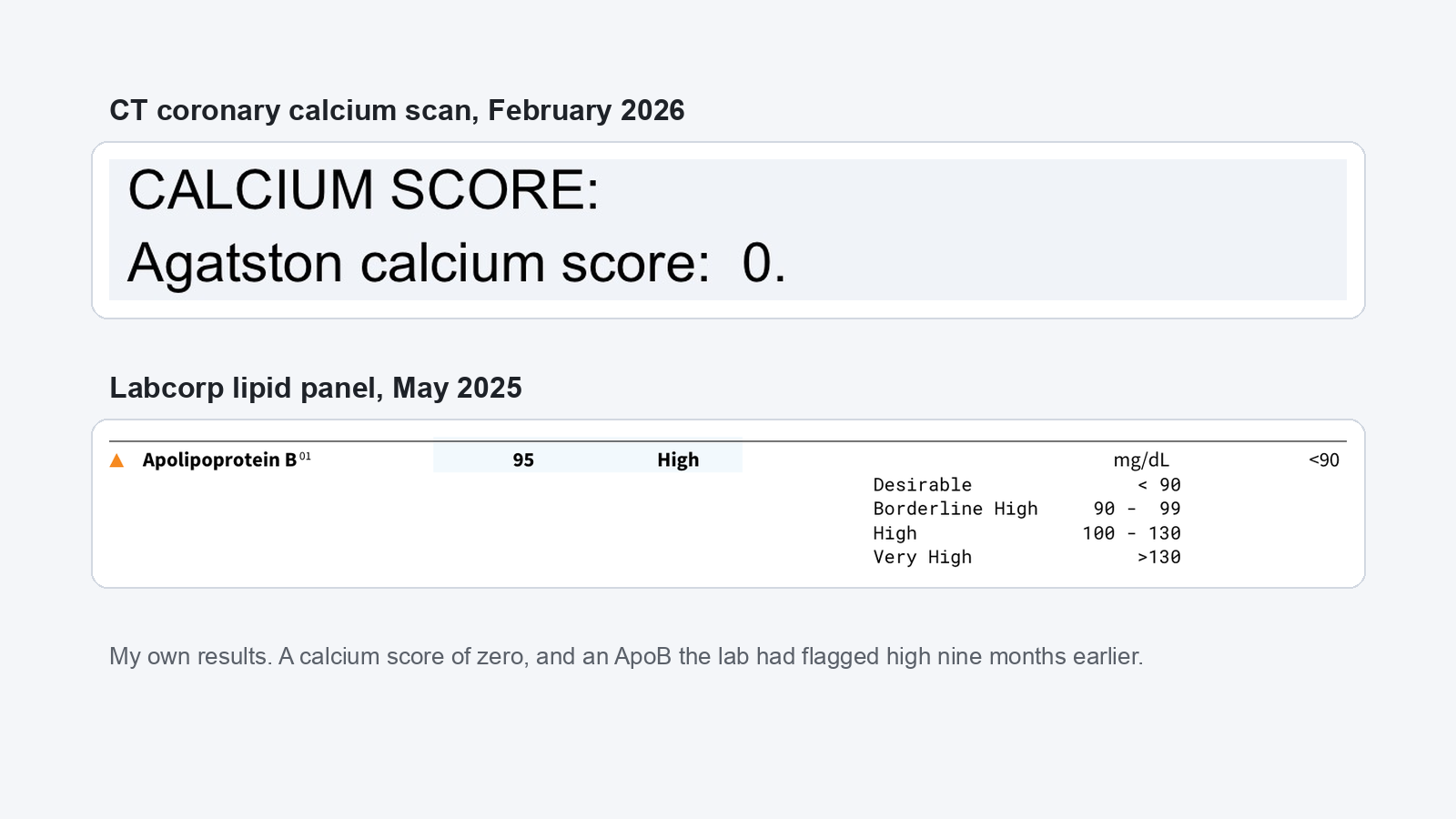
Zero Calcium Score but High Cholesterol: Do You Need a Statin?
My calcium score is zero and my ApoB was flagged high. When the 2026 guideline lets a zero defer a…
-
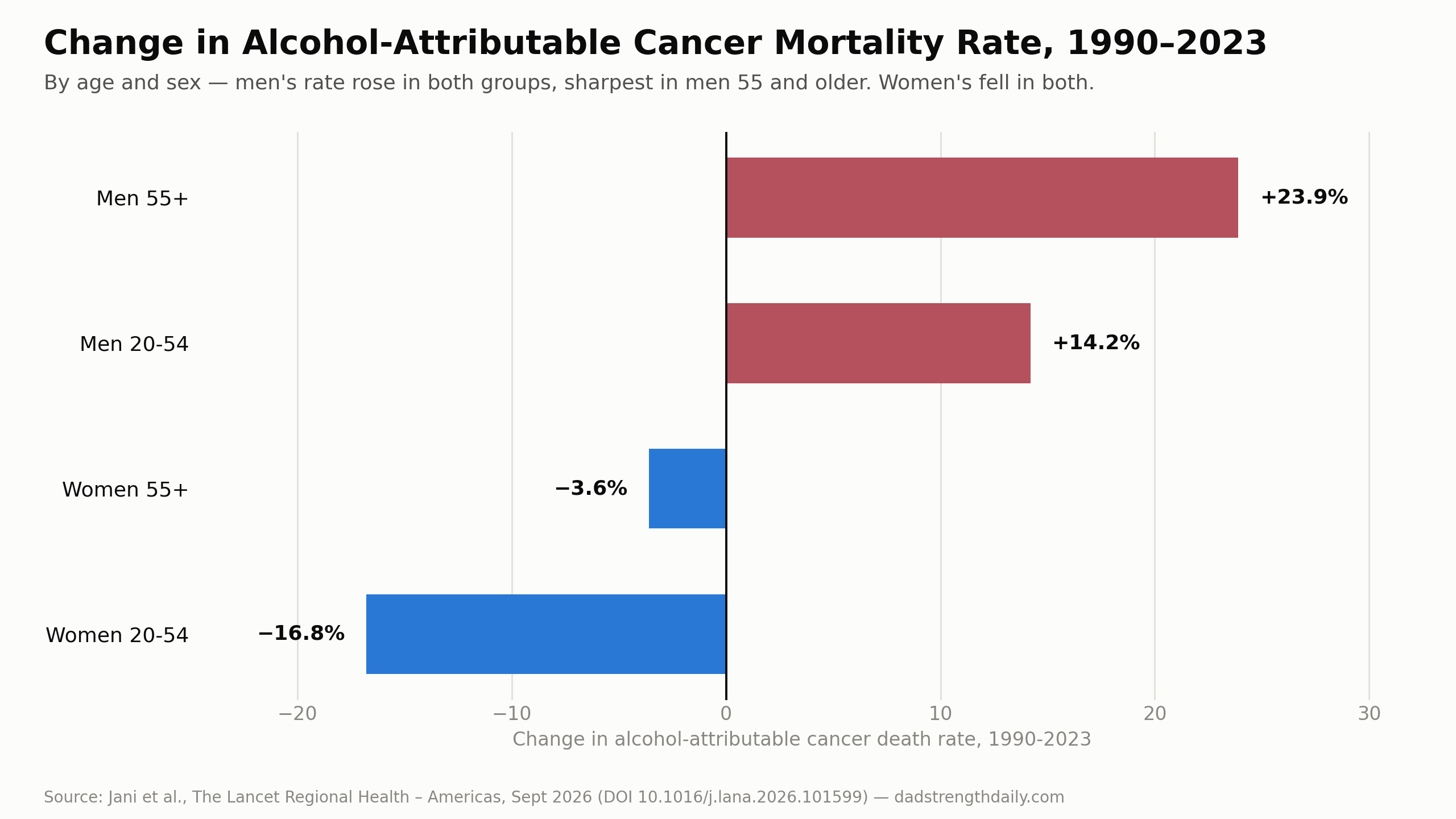
Alcohol-Related Cancer Deaths Doubled Since 1990. Men 55 and Older Saw the Biggest Rate Increase.
I read the study behind the alcohol and cancer deaths headlines. Since 1990, the national rate rose modestly — men…