
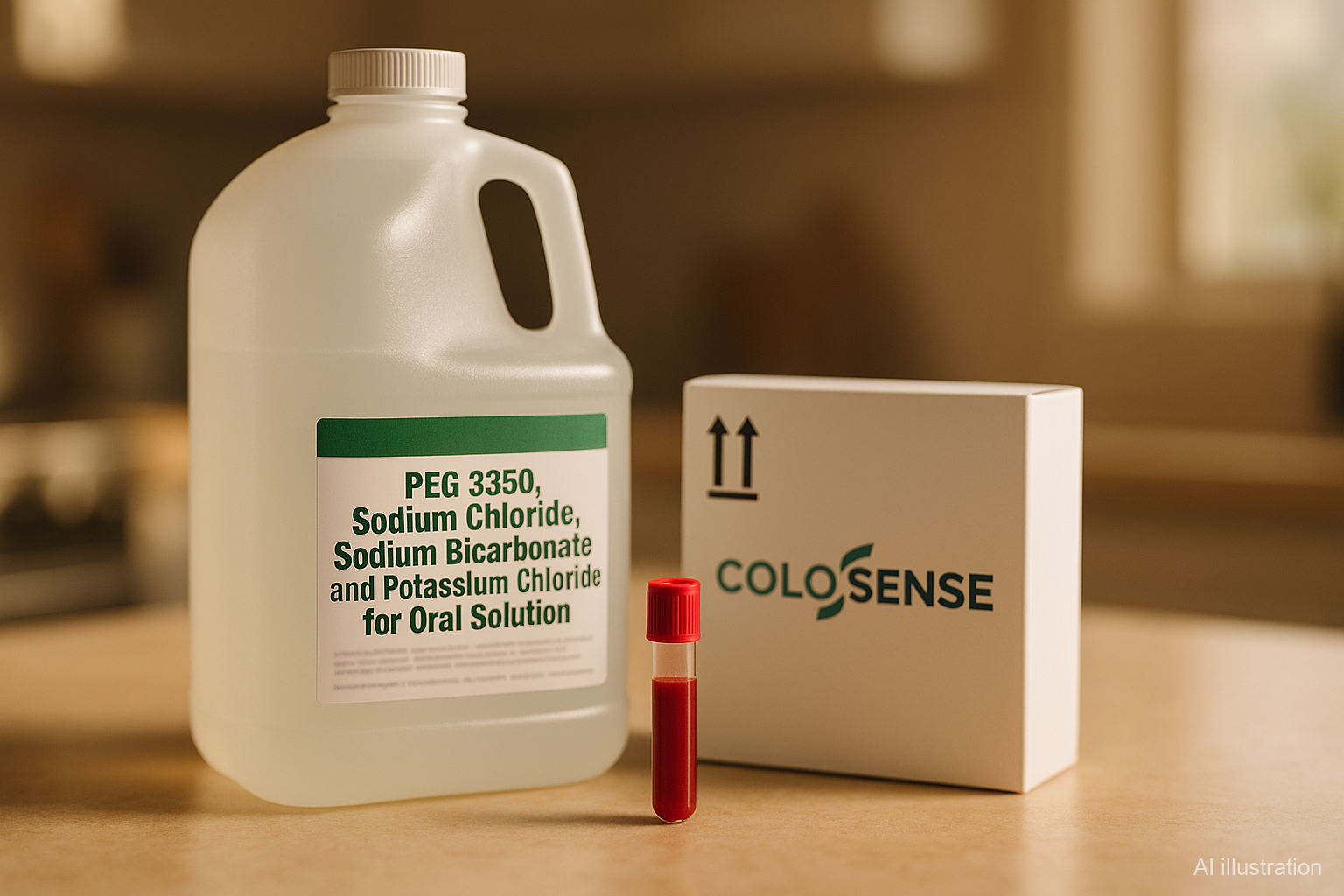
I’m 53, which puts me squarely in the colon cancer screening window, so a guideline update on the subject is not abstract for me. This week the American Cancer Society revised its colorectal cancer screening guideline, published in CA: A Cancer Journal for Clinicians, and the headline is that the menu of tests just got longer, including, for the first time, a simple blood draw. That sounds like unqualified good news. It is mostly good news. But more options is not the same as equal options, and the differences are important.
What the American Cancer Society changed
Get the next one in your inbox
I write about longevity, training, and preventive health weekly — without the guru worship. Free, no spam, unsubscribe whenever.
The timing mostly stays the same. Start at 45 if you’re at average risk, keep going through 75, and after 85 you can stop. Earlier or more often if you have a family history or symptoms. None of that moved.
What moved is the list of acceptable tests. A colonoscopy remains the gold standard. The ACS added a next-generation version of the Cologuard stool DNA test and a new stool RNA test called ColoSense, both done at home every three years. And it added a blood test, sold as Shield, that looks for tumor DNA shed into your bloodstream. The blood test comes with a caveat written right into the guideline: it’s recommended only for people who would otherwise decline the preferred tests, because it’s less sensitive for precancerous growths and early-stage cancer. A newer option is not automatically the better one for the person reading about it, which is the same question I ended up asking about the first mRNA flu vaccine.
The reason for casting a wider net is a number that should bother you. The ACS says more than 20 million eligible Americans, roughly one in three, have never been screened at all. A test someone will actually do beats a better test they keep avoiding. That’s the logic, and it’s sound. The opposite failure is a recommendation nobody can tell applies to them, which is what happened to me when I went looking for the criteria for the RSV vaccine at 50.
Why colonoscopy is still the test to beat
Peter Attia devoted a recent episode of his podcast to exactly this, and I found his framing very compelling. He calls colorectal cancer arguably the most preventable cancer we know of, and the reason is biology. It almost always crawls through a slow, well-mapped sequence, from normal tissue to a benign polyp to a precancerous adenoma to an invasive tumor, and that march usually takes a decade or more. You get a long window to catch it.
Here’s the part that makes colonoscopy different from every other screen. It doesn’t just find the problem, it removes it. The gastroenterologist can see a precancerous polyp and snip it out in the same procedure, before it ever turns into cancer. A mammogram can spot breast cancer and a low-dose CT can spot lung cancer, but neither one reaches in and takes out the thing that would have killed you. Colonoscopy does. As Attia puts it, no other common screening test can make that claim, and once you realize that, the test stops feeling like a once-a-decade indignity and starts looking like the bargain it is.
The frustrating part is how much of this gets left on the table. Attia cites a CDC estimate that roughly 68 percent of colorectal cancer deaths could be prevented by screening even at the standard intervals, and he says that number should stop you cold. Colorectal cancer still kills around 55,000 Americans a year, second only to lung cancer, and we lose most of them not because the screening failed but because they never walked through the door.
The blood test is the convenient option and the weakest one
So where does the new blood test fit. A blood draw is the easiest ask in medicine. No prep, no stool, no day off. For the person who has spent ten years saying no to everything else, that convenience is genuinely valuable, and that’s exactly who the ACS put it there for.
But read what the guideline actually says. The blood test is less sensitive for precancerous lesions and early cancers, which means it’s best at finding disease that’s already established and worst at finding the polyp you’d most want gone. In the studies behind its FDA approval, it flagged only about 13 percent of advanced precancerous growths, missing roughly 87 percent of them, and caught only about 55 to 65 percent of stage I cancers. It mostly detects, it doesn’t prevent. And a positive result doesn’t end the process, it sends you to a colonoscopy anyway. So for someone who will show up for the better test, the blood draw trades away the one thing that makes screening worth doing. I wouldn’t reach for it first. I’d reach for it only if the honest alternative were nothing at all.
The specialists who do this for a living landed in the same place. In its clinical-practice update on blood-based screening, the American Gastroenterological Association called the blood test reasonable only for someone who would otherwise refuse every other option. It shouldn’t replace a colonoscopy, a positive result still has to be confirmed with one, and the group’s own modeling expected it to prevent fewer cancers and fewer deaths than FIT, Cologuard, or a colonoscopy. So the ranking here isn’t just mine. It’s where the doctors who scope colons all day come down too.
If you’re under 50, this isn’t someone else’s problem
The other shift behind this update is who’s getting sick. Colorectal cancer in younger adults has been climbing for years, and the ACS now describes it as the leading cause of cancer death in adults under 50. The same slow biology that gives older adults a long screening window means a younger person can be quietly growing a problem for years with nothing to feel.
That’s why symptoms matter at any age. Rectal bleeding, a real change in your bowel habits, unexplained weight loss, ongoing abdominal pain, or an iron deficiency (low ferritin level) with no obvious cause are not things to sit on until you turn 45. They’re reasons to call a doctor now and say the words colon cancer out loud, even if you feel too young for it. Caught early, five-year survival runs above 90 percent. Caught late, it falls off a cliff. Feeling too young is exactly the trap.
How to actually choose
Strip away the brand names and the decision is simple. The best test is the one you’ll complete, on schedule, with eyes open about what it does. Screening is the least glamorous part of running your own health, and probably the highest-yield. If you can manage a colonoscopy, it’s the most protective option you have, because it both finds and removes, and a clean one buys you roughly a decade. If you genuinely won’t do that, a stool test every one to three years is a real and respectable choice, far better than nothing, as long as you understand that a positive result means a colonoscopy is still coming. The same logic applies to the cancer that is easiest to see and easiest to talk yourself out of looking at. I wrote separately about melanoma in men over 50, and why the standard checklist can miss the dangerous kind.
This is also where Attia lands in practice. He doesn’t just wait out the full ten years between colonoscopies. He runs an at-home test on the off-years in between, usually Cologuard, because a clean scope can still miss a flat polyp and the occasional cancer surfaces in the gap. If you want more than one look per decade, layering a stool test into the off-years is a reasonable way to get it.
And if you do book the colonoscopy, make it count. The quality of the exam isn’t uniform, and Attia spends real time on this. A good result depends on a thorough bowel prep on your end and an unhurried, experienced operator on theirs. It’s fair to ask your gastroenterologist about their adenoma detection rate, the standard measure of how good they are at actually finding polyps. (I used to think asking that would be obnoxious. It isn’t. It’s your colon.) Map the rest to your own risk, your family history, and your symptoms, with a doctor who knows you.
The expanded menu is a win if it drags the one in three who skip screening into doing something. But convenience came at the cost of sensitivity, and for a cancer this preventable, the easy test is the one I’d choose last, not first. If you can stomach the prep once a decade, a colonoscopy is about as close as medicine gets to a cancer you can opt out of. I plan to keep opting out the hard way.
About Gunnar
Gunnar is 53. He lost about 170 pounds, trains in a garage gym, and writes DadStrengthDaily from personal experience, citing primary sources where he can. He also moderates r/ProactiveHealth. He is not a doctor, and nothing here is medical advice. Talk to your own doctor before acting on anything, especially GLP-1s, TRT, blood pressure, sleep apnea, and cancer screening.