
Heart Health and Bloodwork After 50
Your cholesterol panel, your blood pressure, Lp(a), and the bloodwork most men over 50 never get explained. What the numbers mean, which ones are worth treating, and what I track on myself.
By Gunnar · Patient experience, not medical advice · Updated August 2026
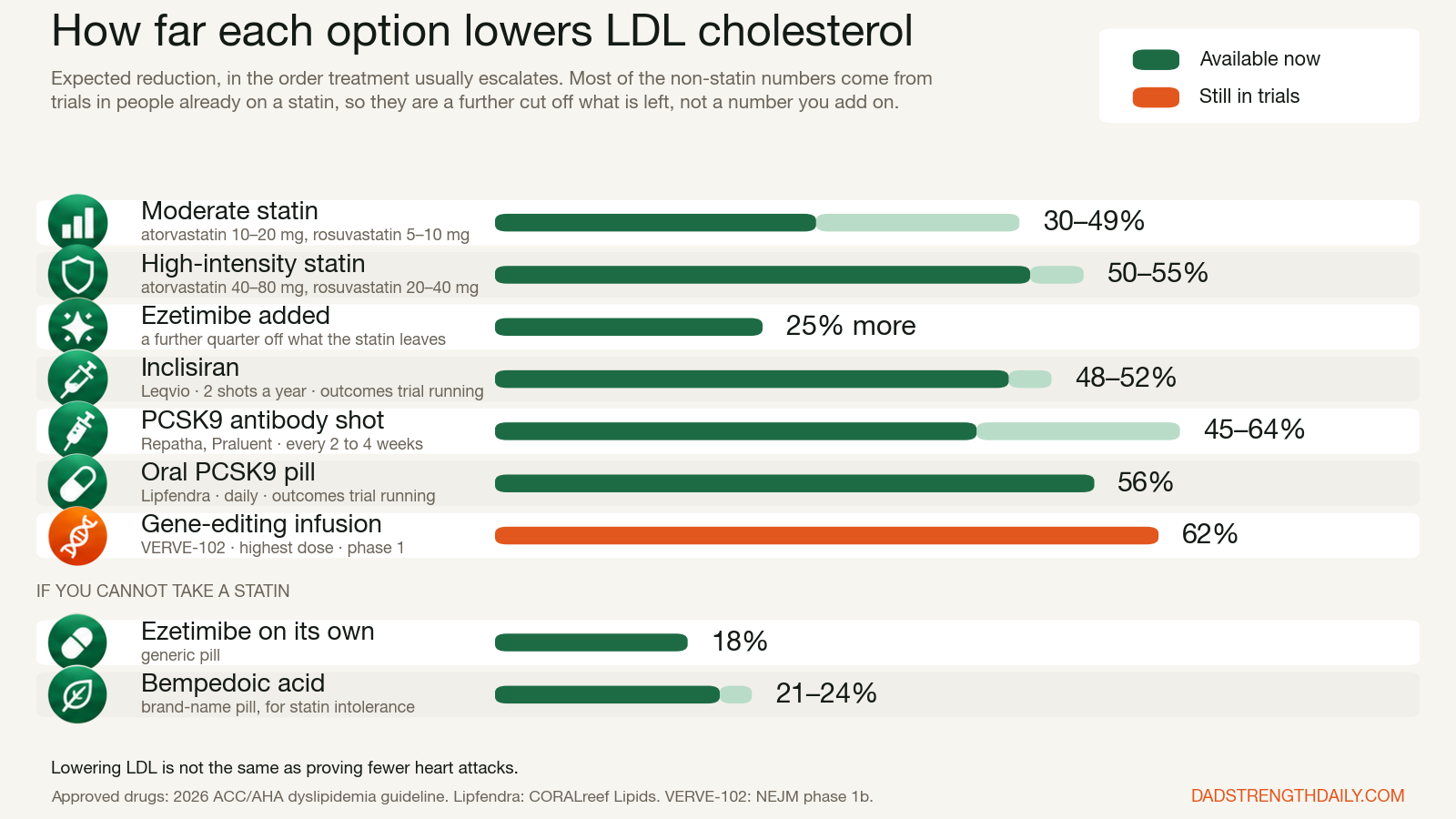
Where these numbers come from
| Option | Expected LDL-C reduction | Source |
|---|---|---|
| Ezetimibe, on its own | 18% | 2026 ACC/AHA dyslipidemia guideline |
| Bempedoic acid, on its own (statin intolerance) | 21–24% | 2026 ACC/AHA dyslipidemia guideline |
| Ezetimibe added to a statin | a further 25% off what the statin leaves | 2026 ACC/AHA dyslipidemia guideline |
| Moderate-intensity statin | 30–49% | 2026 ACC/AHA guideline, Table 6 |
| High-intensity statin | 50% or more; the statin class tops out at 55% | 2026 ACC/AHA guideline, Table 6 |
| Inclisiran (Leqvio) | 48–52% | 2026 ACC/AHA dyslipidemia guideline |
| PCSK9 injection (Repatha, Praluent) | 45–64% | 2026 ACC/AHA dyslipidemia guideline |
| Oral PCSK9 pill (Lipfendra) | 56% at week 24 | Merck, CORALreef Lipids |
| Gene-editing infusion (VERVE-102, in trials) | 62% at the highest dose | New England Journal of Medicine |
What men over 50 should know
Most men my age get one cholesterol number and no explanation. Your doctor reads out an LDL, says it looks a little high, and the visit moves on. The 2026 ACC/AHA guideline widened what that conversation is supposed to cover. It starts estimating risk at 30 rather than 40, and runs the estimate out to 30 years as well as 10. It also says every adult should have Lp(a) measured at least once, which is probably the change most likely to matter to you personally, because Lp(a) is inherited, a standard panel does not report it, and a respectable LDL can be sitting on top of a bad one.
The ladder is longer than it used to be, and the cheap rungs still do most of the work. A statin is first-line for nearly everyone who needs treating at all. Ezetimibe takes about another quarter off whatever the statin leaves behind, for roughly twenty dollars a month, and the newer drugs, the injections and now a daily PCSK9 pill, are for people who are still above goal on those or who cannot tolerate a statin. My own LDL is 56 and my ApoB is 59, and I got there through about 170 pounds of weight loss and ezetimibe, without ever taking a statin. That is not a protocol, it is just what happened to me, but it is why I get skeptical when the conversation jumps straight to the expensive rung. If you want to see where any ApoB number falls, the ApoB levels chart maps 40 to 140-plus.
Not every number on the panel is a target. Inflammation is the clearest case. hs-CRP predicts events about as well as anything else you can measure cheaply, and then ZEUS, a trial in 6,376 people who already had both heart disease and kidney disease, drove it down with an IL-6 blocker and heart attacks and strokes did not move. I read a high hs-CRP as a reason to look harder now, not as a dial to turn. The things that have actually held up in outcome trials are duller than any new marker, and I have stopped being disappointed about that.
Start here
- Reading Your Cholesterol Panel at 50
What each line on the report means, under the 2026 guideline. - Lp(a): The Number Most Doctors Miss
The inherited number a standard panel does not report, and why one measurement is usually enough. - The First Lp(a) Drug Just Missed Its Big Trial
What the Lp(a)HORIZON result does and doesn’t mean, and why I’m still betting on ApoB and LDL. - Check Your Bloodwork, Regularly
One of the first things I wrote here, and still the whole point. Get the labs, then actually read them. - The Year I Took My Heart Seriously
How I got my LDL down with weight loss and ezetimibe, and no statin.
Cholesterol drugs, cheapest rung first
- The Weird History of Statins
Mold, muscle pain, and how much of the muscle pain is the nocebo effect. - The Cholesterol Expert Who Can’t Take Statins
What one of the field’s best-known lipidologists does when the cheap rungs are off the table. - The First PCSK9 Pill Was Just Approved
Who might genuinely need it, and who is fine without it. - Lipfendra vs Repatha
The pill is easier to take. The injection is the one with the outcomes data.
Blood pressure and fitness
- The Blood Pressure Wake-Up Call
My mom had high blood pressure most of her life, and I still ignored mine for years. - What Counts as High Blood Pressure Now
120/80, 130/80, and where the lines actually sit. - The 2025 Guidelines Swapped the Risk Calculator
Same definition of hypertension, different math for who ends up on medication. - VO2 Max Predicts Longevity
Just not in the way the podcasts say it does.
Still being argued about
- I Drove My Inflammation Number to Almost Zero
Then a trial in 6,376 people with heart and kidney disease lowered it with a drug, and heart attacks and strokes did not budge. - One Infusion, 62 Percent Less LDL, and It Edits Your DNA
The biggest number on the chart above, and how early it still is. - My Wife Just Bought Calcium Chews
A BMJ paper is the reason I would skip them. - Obesity’s Blood Pressure and Cholesterol Gap Shrank
It was not Ozempic that closed it.
Latest in Heart & Bloodwork
-
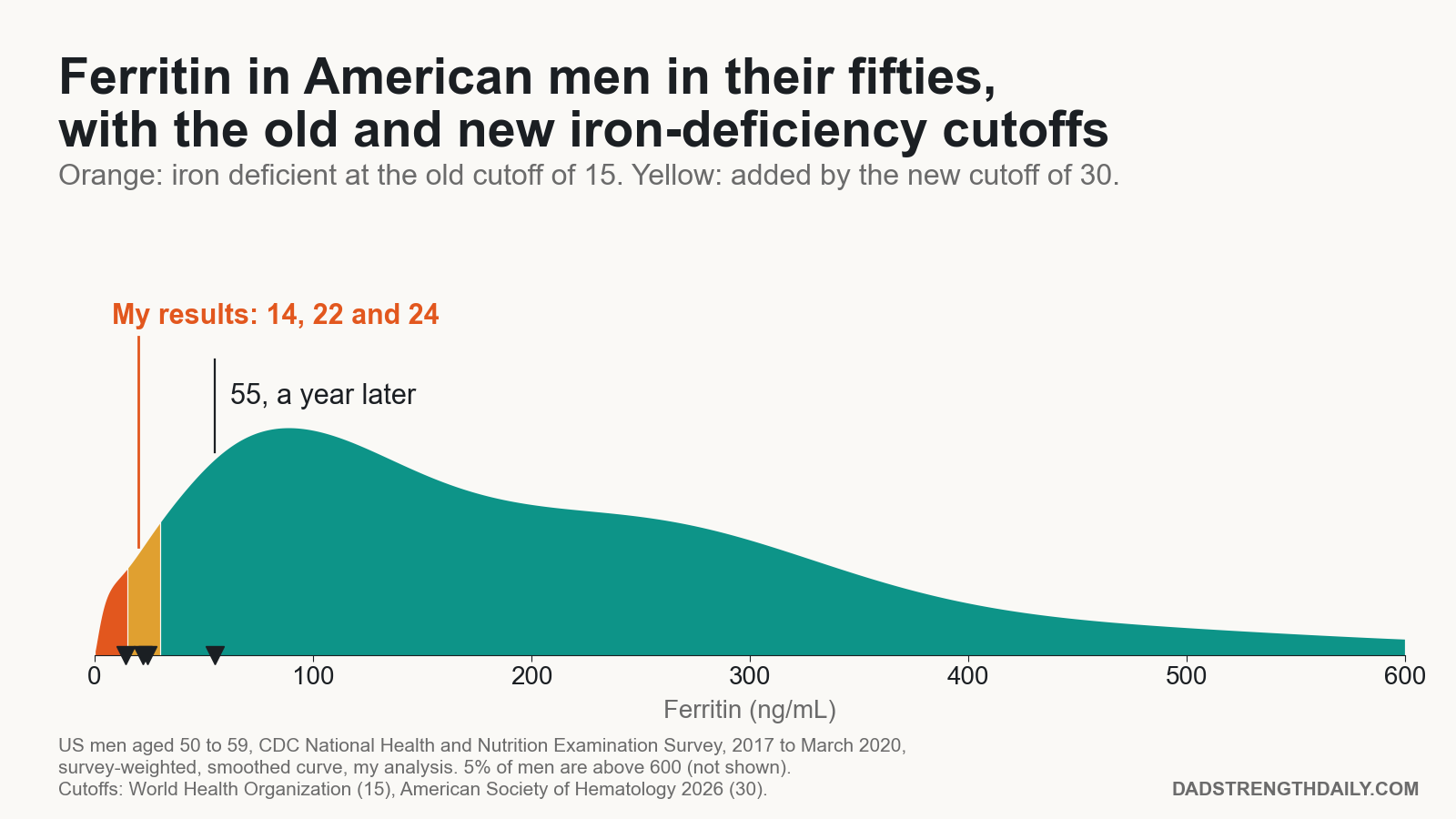
Low Ferritin in Men: A New Guideline Suggests a Cutoff of 30, Not 15
A new hematology guideline moves the ferritin cutoff for iron deficiency in adults from 15 to 30 ng/mL. What ferritin…
-
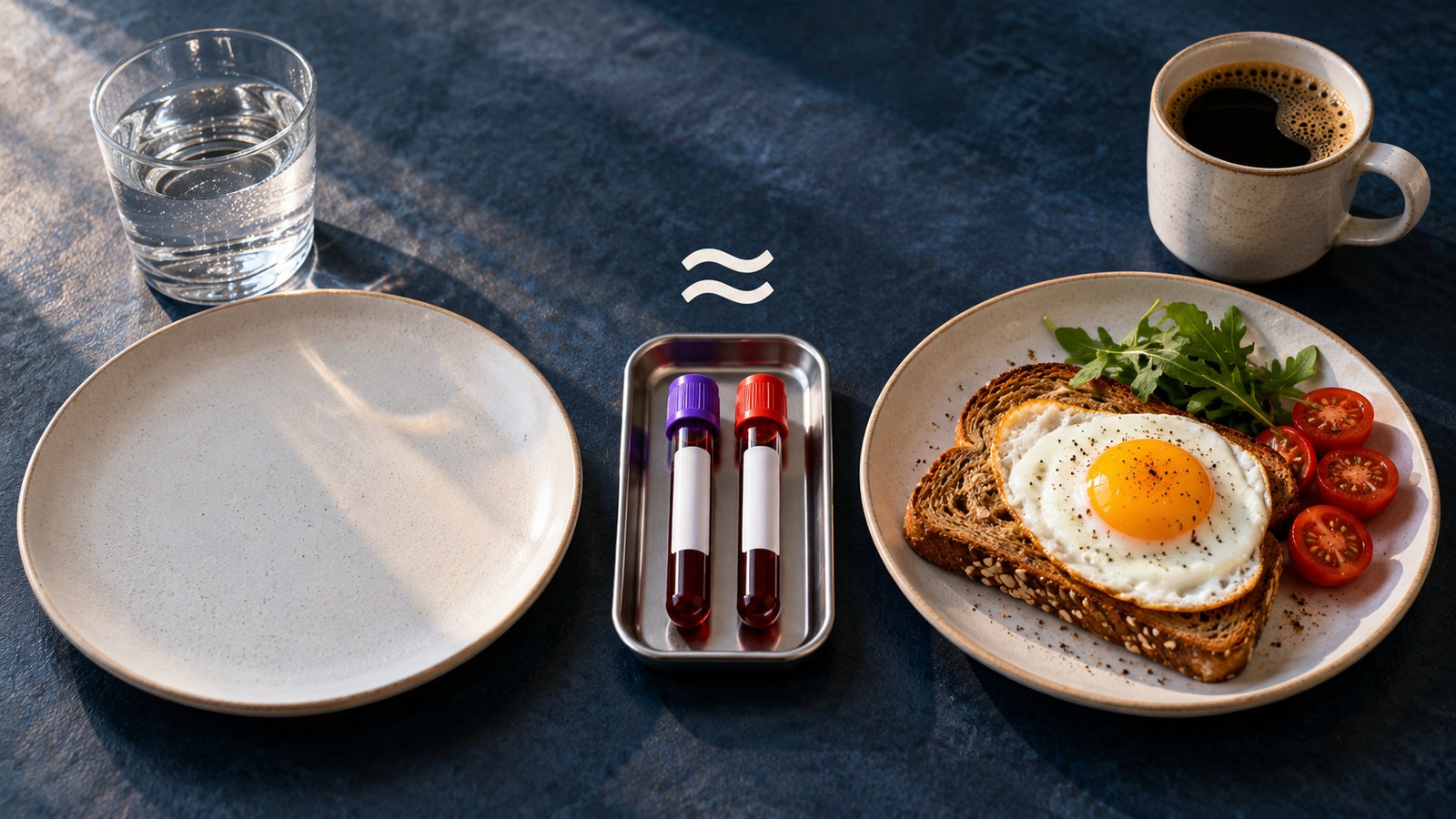
How Long to Fast Before a Blood Test? For Most Tests, It Barely Matters
How long to fast before a blood test: a JAMA Internal Medicine study of 101,148 patients found 8 hours covers…
-
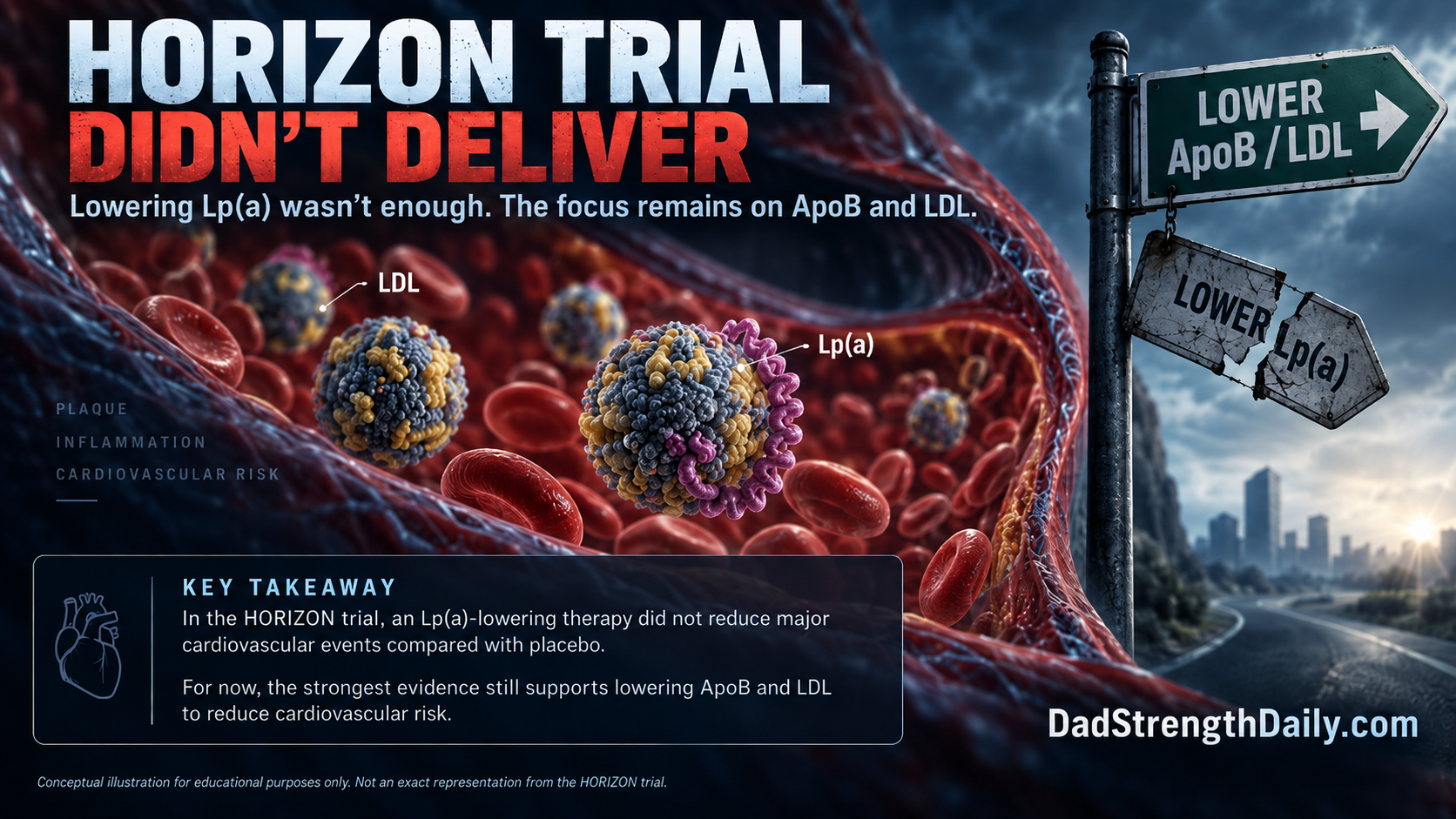
The First Big Lp(a) Drug Trial Missed Its Main Goal. It Put LDL Back at the Top of My List.
Pelacarsen missed its primary endpoint in the Lp(a)HORIZON trial. Here’s what’s actually known, what two doctors think happened, and why…
-
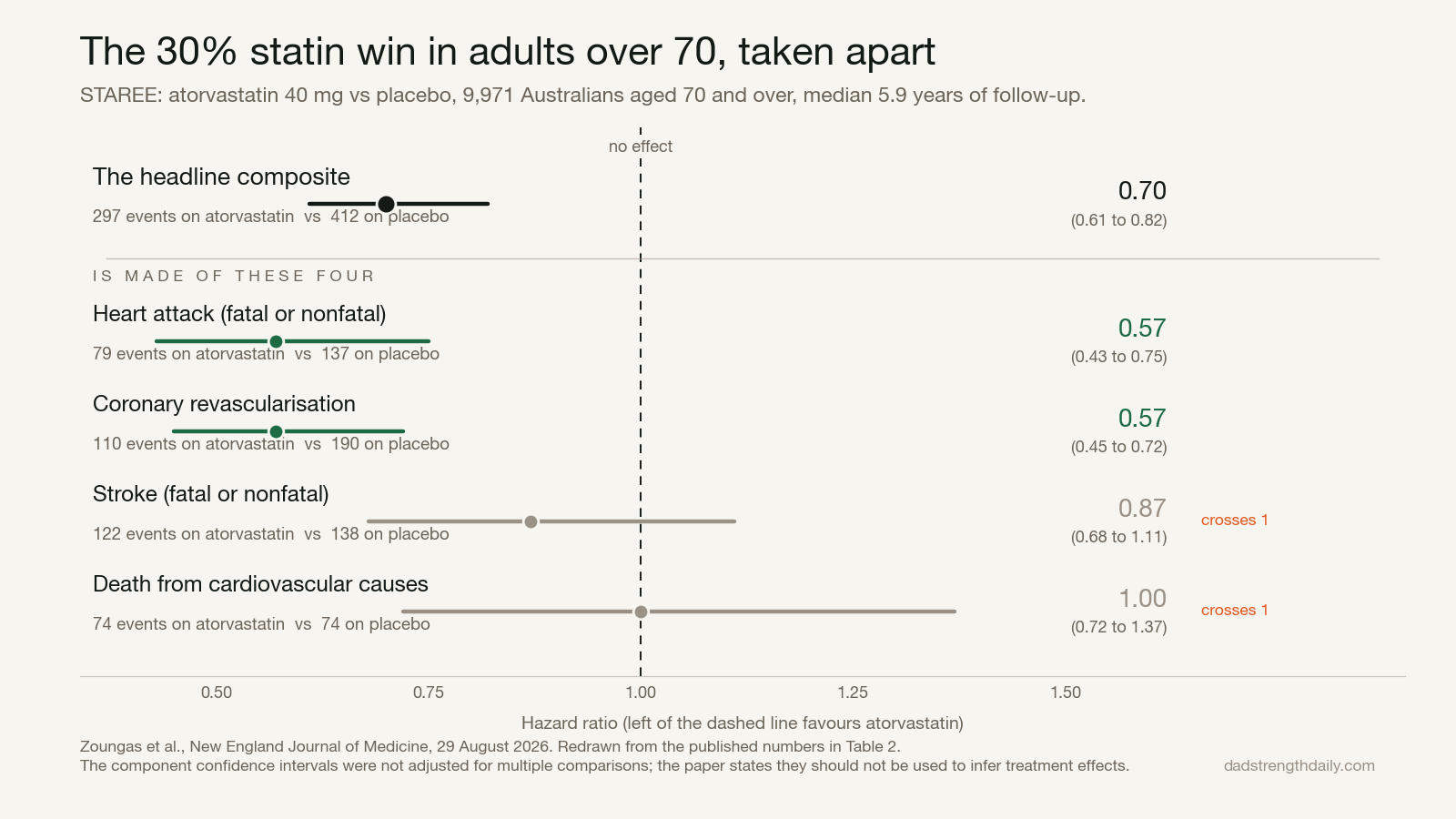
Heart Attacks Were 43% Lower With a Statin in Adults Over 70. Cardiovascular Deaths Were Not.
I do not take a statin. I got my ApoB to 59 with about 170 pounds of weight loss and…
-
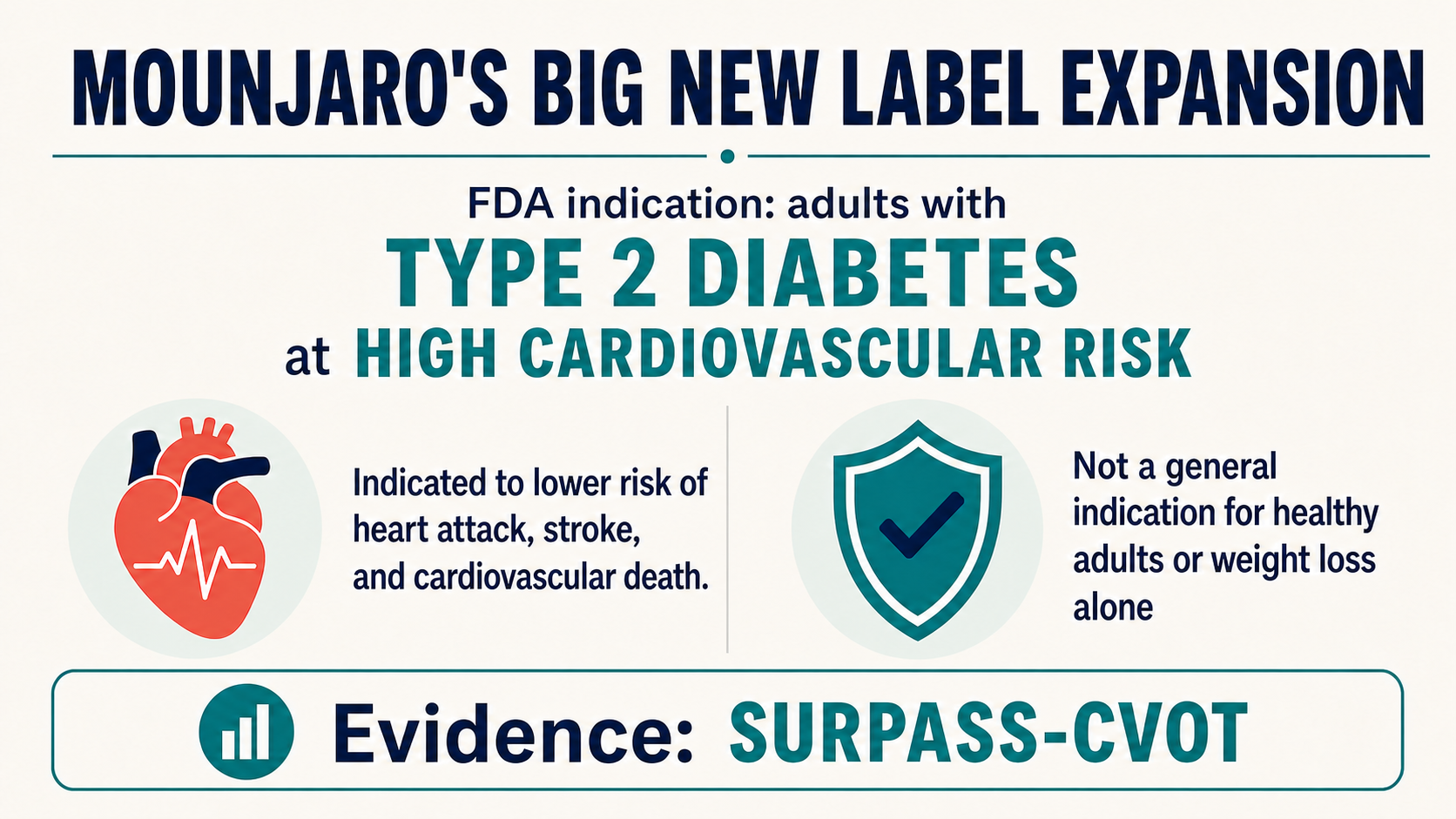
Mounjaro Just Got a Heart Indication. The Trial Behind It Didn’t Beat the Older Drug.
Updated September 16, 2026 with the revised label now posted to DailyMed. The FDA approved Mounjaro today to lower the…
-
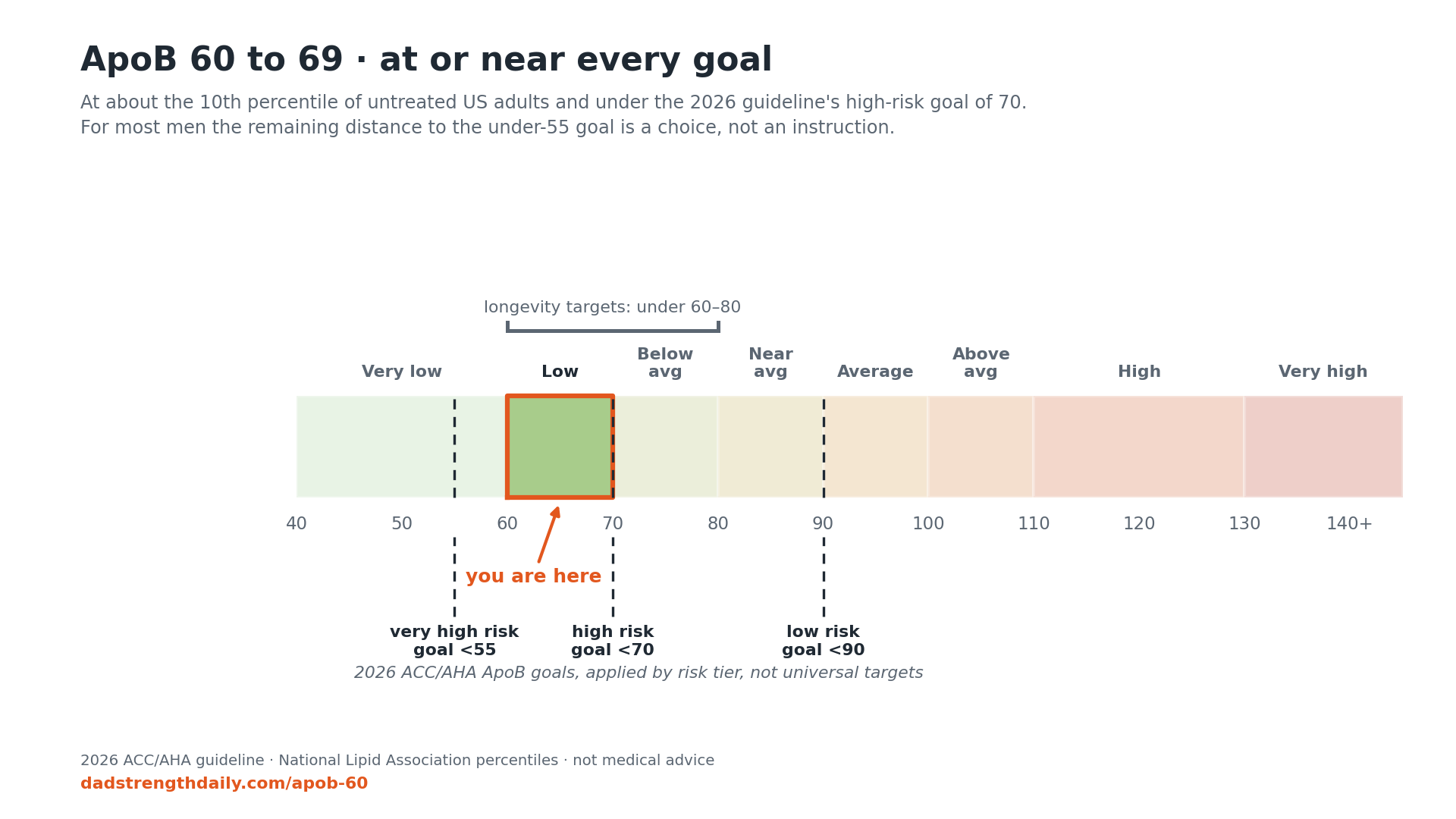
ApoB 60: Almost Nobody Needs to Go Lower. Here Is Who Does.
An ApoB of 60 mg/dL sits at about the 10th percentile of untreated American adults, lower than roughly nine of…
-
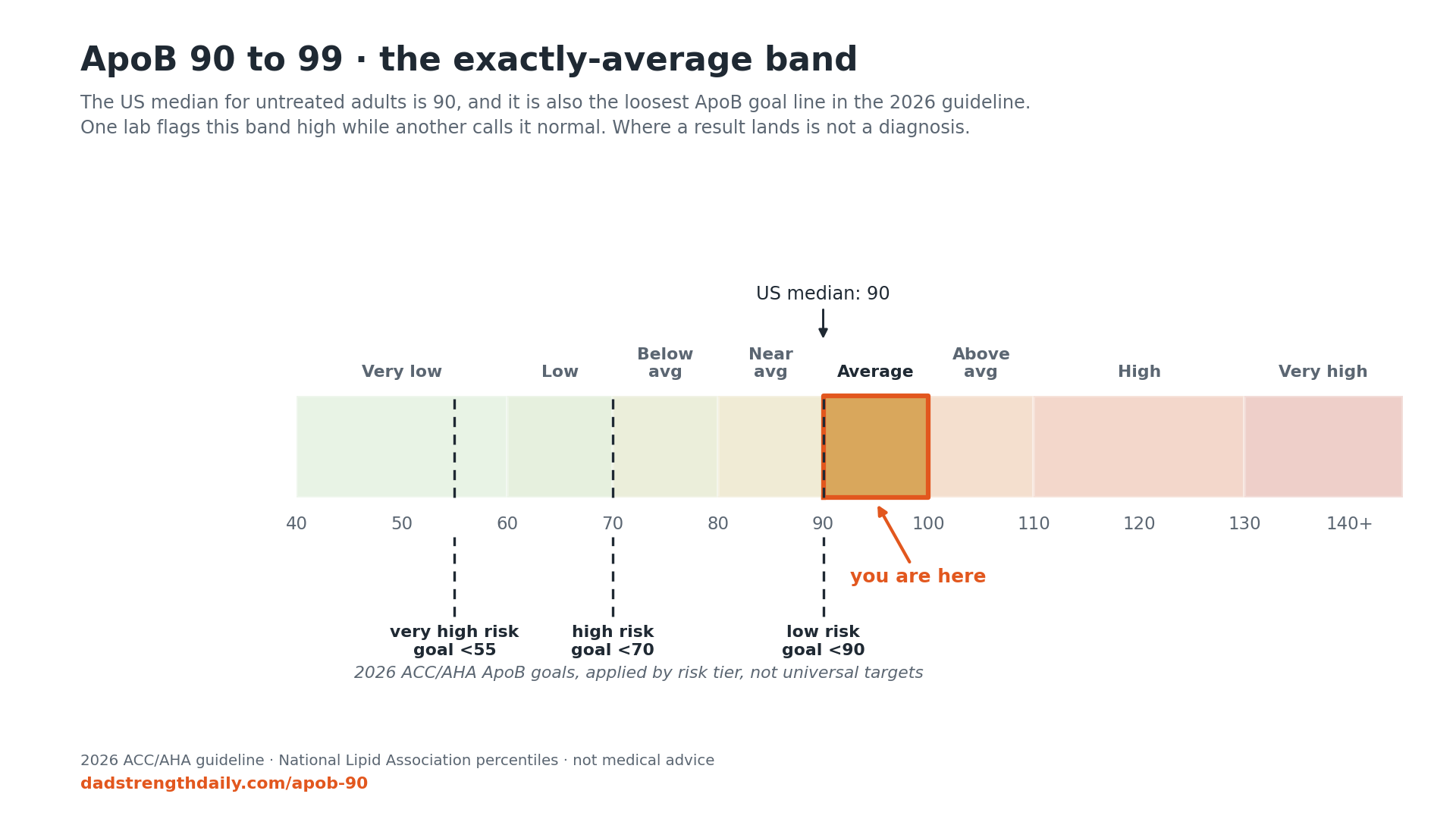
ApoB 90 Is Exactly Average. That Is the Problem.
An ApoB of 90 mg/dL is the most average result an American adult can get. ApoB is in effect a…
-
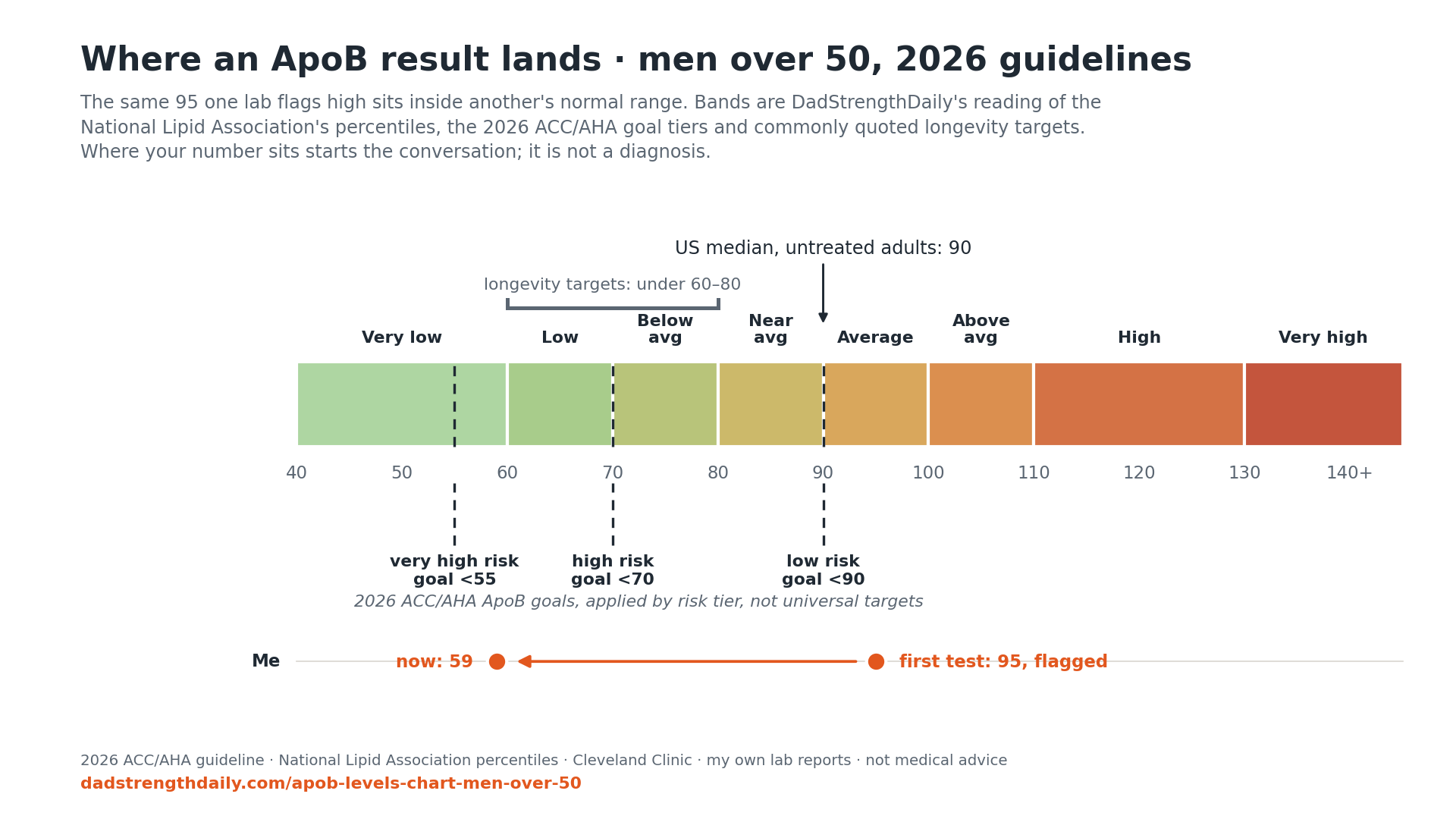
ApoB Levels: The Complete Chart for Men Over 50 (2026 Guidelines)
My first ApoB result was 95 mg/dL, in May 2025. Labcorp flagged it high, because Labcorp’s reference range tops out…