
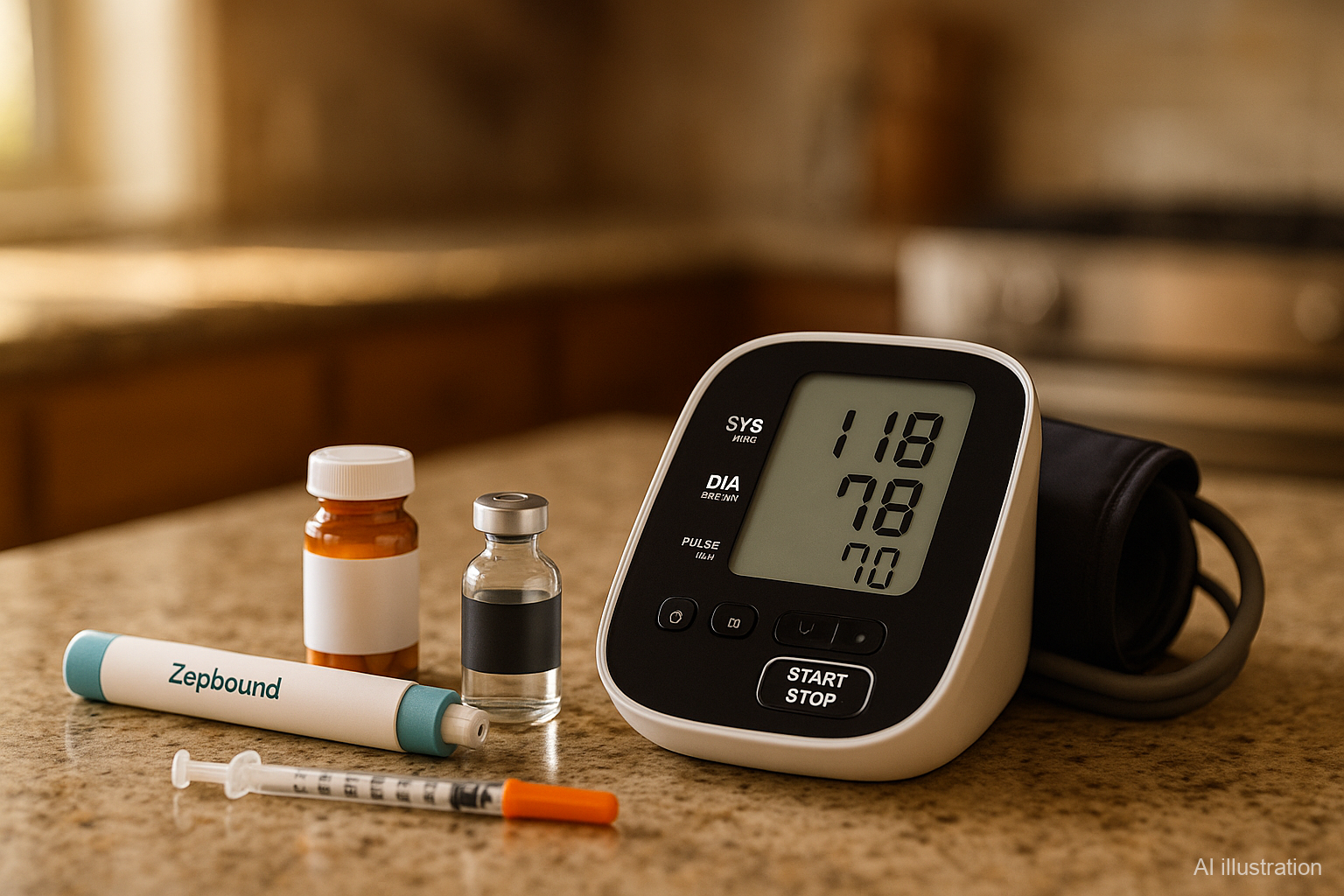
I keep a sharps container in the house now, and it barely registers. A GLP-1 shot once a week. Testosterone three times a week. Disinfect, pinch, push, get on with the morning. Not long ago the idea would have made me wince. Now it is the least interesting thing about my Monday.
I bring it up because a writer at The Atlantic, Daniel Engber, just called this the age of the needle, and he has a point. GLP-1 shots, fertility injections, Botox, the peptides half of podcast culture won’t stop talking about. Americans are getting stuck more than ever. But the part that stayed with me is not how many of us are injecting. It is who isn’t, and why.
My wife and the blood thinners
Get the next one in your inbox
I write about longevity, training, and preventive health weekly — without the guru worship. Free, no spam, unsubscribe whenever.
My wife broke her femur a while back. The surgery went well. The part she dreaded every day of the recovery was the blood thinner, a small shot under the skin to keep clots from forming while the bone healed. She is not squeamish about much, but she came to hate those injections, the bracing-for-it more than the stick itself. By the end she would have traded almost anything to skip them.
She is hardly alone. For a lot of people the needle is the entire decision, ahead of the cost or the side effects or anything the data says. Tell someone the most effective metabolic medicine in a generation comes as a weekly injection, and a good share of them are out before you finish the sentence. The molecule was never their problem. The delivery was.
That is why the new oral options matter more than the headlines suggest. Two GLP-1 pills just cleared the FDA, and I spent a while comparing the two of them. A pill is not better medicine than a shot. It is medicine more people will actually take. For someone like my wife, that is the gap between a treatment that exists and a treatment that exists for her.
Running more of it myself
It took me a while to realize that the shot is just the visible part. The bigger shift is how much of my own health I now run myself.
I order my own blood work instead of hoping an annual physical covers it. When I started testosterone I learned to watch more than the testosterone number, keeping an eye on my hematocrit and my estradiol, because those are the ones that quietly get you into trouble. I wrote about what that has actually been like. I use telehealth for the prescriptions that used to cost me a half day off work. I fought my own insurance over a GLP-1, lost enough rounds, and went and learned the self-pay routes instead.
So the needle gets the attention, but more of it runs through me than it used to. Some of that is the drugs themselves. A lot of it is that the tools finally exist, a direct-to-consumer lab order, a telehealth visit at nine at night, a manufacturer program that sells under the list price if you pay cash. A guy my age used to manage his health by showing up once a year and doing what he was told. Now I show up with my own numbers in hand.
It isn’t all upside
I do not want to pretend this is all upside. The same ease that let me order a lab panel lets anyone order one they have no idea how to read. The same momentum that put a real pill within reach also feeds the gray market, the unregulated peptides people inject on tik tok. I have written about why I stay curious but skeptical on that front. Engber flagged the strangest version of it, the people who will gladly stick themselves with some research chemical marked as “not for human use” they bought online but will not take a tested, proven vaccine. Running more of your own health does not automatically mean running it well.
So I obviously still see a doctor. I still have the labs read by someone who knows more than I do. The move toward self-managed care is real and mostly good, but it asks more of you, not less. You get more control, and more homework with it.
The needle is becoming optional
For me the needle quietly stopped counting for anything. Four sticks a week is just part of the schedule. For my wife it never stopped counting, and it likely never will, and she should not have to white-knuckle a shot to get care that could just as easily come as a pill. The good news is that the needle is slowly becoming optional, through pills, better auto-pens, finer points, and whatever lands next.
The deeper change is that more of this sits in our hands than it used to. The shot is only the part you notice. Behind it is a quieter handover, of labs and prescriptions and monitoring and judgment calls, from the once-a-year appointment to your own kitchen table. The best version of it is someone who knows their own numbers and still keeps a sharp doctor in the loop. The needle was never really the point. It was just the first thing anyone saw.
I keep a running tracker of every GLP-1 and incretin drug, approved and still in the pipeline, with what each one targets, how far along it is, and what's coming next.
See the full GLP-1 Pipeline Tracker →About Gunnar
Gunnar is 53. He lost about 170 pounds, trains in a garage gym, and writes DadStrengthDaily from personal experience, citing primary sources where he can. He also moderates r/ProactiveHealth. He is not a doctor, and nothing here is medical advice. Talk to your own doctor before acting on anything, especially GLP-1s, TRT, blood pressure, sleep apnea, and cancer screening.