
I paid for two scans six months apart while losing 35 pounds on Zepbound, and the number I bragged about here is the one I got wrong.
An earlier version of this post had a parenthesis in it that I am now embarrassed by. I wrote that my second DEXA scan showed 9.6 pounds of lean mass gained, then added, in brackets, that I took that to mean muscle. Smiley face and all. I was delighted!
Then I read the measurement literature properly. That parenthesis is not slightly wrong. The machine I paid for does not measure muscle directly, and a change in the whole-body lean number is not a muscle measurement, so I have rewritten the post rather than deleting one line and hoping nobody noticed.
I still think both scans were worth the money and I will book a third. But most of what I liked about that report is softer than it looked on the morning I got it, and I am in an unusually good position to say so. Search for any of this and the whole first page of results belongs to companies selling DEXA scans or GLP-1 prescriptions. I paid retail, and this site sells nothing.
| 10 October 2025 | 10 April 2026 | |
|---|---|---|
| Body weight | 245 lb | 210 lb |
| Fat mass | 76.0 lb | 31.7 lb |
| Lean mass | 161.6 lb | 171.2 lb |
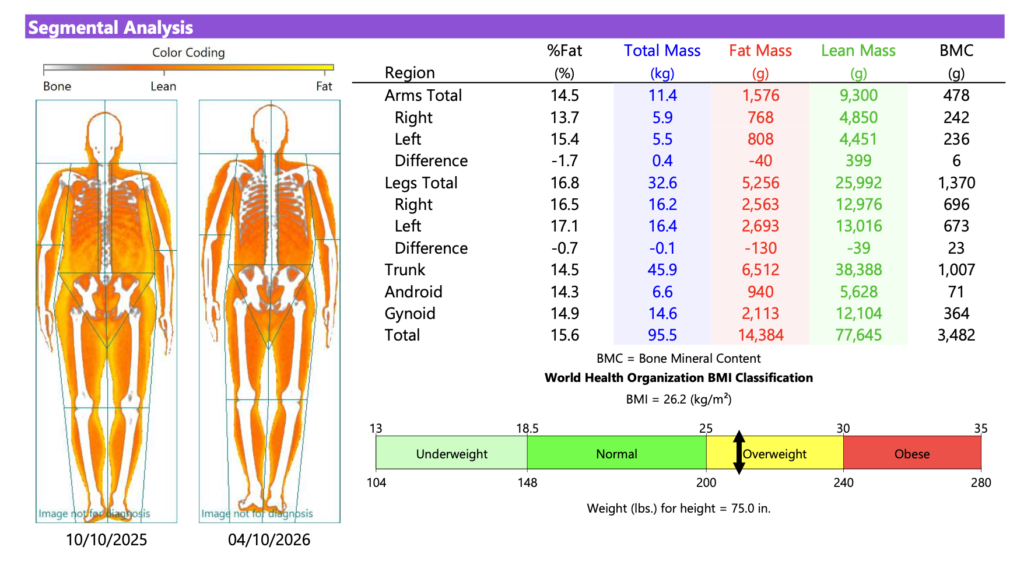
| Total body fat | 15.6% | |
| Visceral fat area | 147 cm² | 66 cm² |
| Android/gynoid ratio | 1.39 | 0.96 |
(Fat and lean do not sum to body weight because DEXA counts bone separately: my April report prints 3,482 grams of bone mineral, about 7.7 pounds. The 15.6% is the figure the machine printed, and it is fat as a share of soft tissue only, fat divided by fat plus lean, which is why it does not match fat divided by everything I weigh.)
I am 53 and 6 feet 3, started at 373 pounds in October 2024 when my doctor put me on Zepbound, and take 12.5 mg a week now. Both scans were on a GE Lunar iDXA in Wellesley, Massachusetts. I am also on physician-prescribed TRT at 120 mg a week, which matters to that lean mass line more than anything else here.
Does a DEXA scan measure muscle? Not the way I said it did
What a DEXA reports is lean soft tissue mass, which the field’s own methodologists define as “the estimated mass of all nonfat, non-bone mineral molecules in the body, regardless of where they occur” (Tinsley and Heymsfield, Journal of the Endocrine Society, 2024). That is a molecular category, not an anatomical one, and it cannot tell a quadriceps from a liver from a pint of water. The same paper says skeletal muscle mass “should only be reported by appropriate imaging techniques,” meaning MRI, CT or ultrasound. A DEXA is not one of them.
Fat-free mass is roughly 74% water, 19% protein and 6.5% mineral, so the compartment I gained 9.6 pounds of is, by mass, mostly water. That took the air out of my victory lap. Some of the gain is protein and some of it is training. I cannot tell you what fraction, and neither can the report.
This is not a skeptic’s framing. Lilly’s own tirzepatide paper defines its lean mass endpoint as “fat-free mass minus total bone mineral content (also known as lean soft tissue mass).” The drug company knows. My scan shop used the loose word anyway, and so did I.
I also cannot separate what the garage gym did from what the hormone did. The testosterone is prescribed and monitored and I think it has been good for me, and it means anyone quoting my 9.6 pounds as proof a GLP-1 plus lifting builds muscle is quoting a man on hormone therapy who ran no control arm.
A DEXA lean mass number moves with what you ate that morning
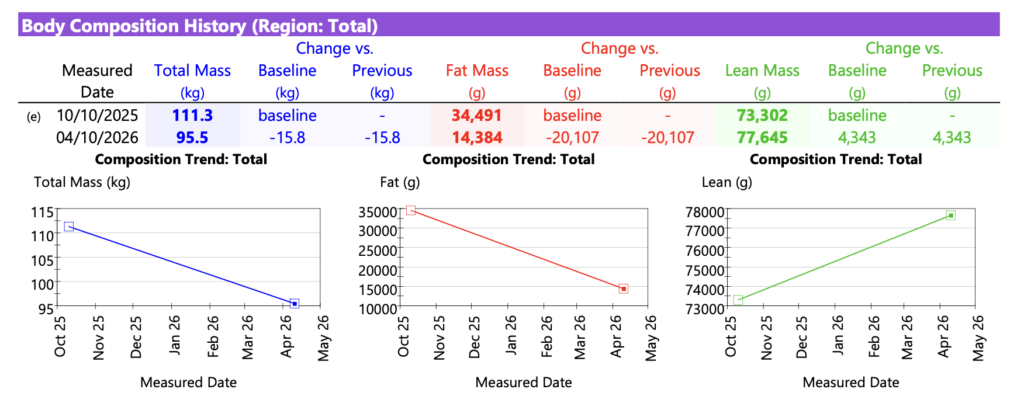
The best study on this is a crossover trial by Tinsley and colleagues (Medicine & Science in Sports & Exercise, 2017). Forty-eight men and women ate a very-high-carbohydrate day and a very-low-carbohydrate day, scanned fasted in the morning, fed in the afternoon, and fasted again the next morning. Feeding raised total lean soft tissue by up to 1.7% on average, and over 4.5% in some individuals. On my body that is close to 3 pounds, and nearly 8 at the top end. From lunch. Both diets did it, so it was not a carbohydrate effect, and everything reset after one overnight fast.
I did not fast for either of my scans on any deliberate protocol, and I could not tell you now how hydrated I was on either morning, because I did not write it down. For scale, two DEXA scans a day apart disagree with each other by about 4.6 pounds of lean mass on their own, on bodies that have barely changed in between (Zemski et al., Journal of Clinical Densitometry, 2019). Mine moved 9.6 pounds over six months, which is bigger than that day-to-day error, and that is why I believe the direction of it. The formal statistical bar for calling a change real sits higher again, and I cannot tell you where, because Zemski’s group published the precision error and not the threshold. Their 21 subjects were also resistance-trained athletes, not 53-year-old men on tirzepatide.
For a GLP-1 user this stops being a footnote. McMath and Gallagher’s 2026 review in Obesity Reviews went through 22 anti-obesity-medication studies and found 20 of them used methods sensitive to hydration and “did not report any standardized procedures.” Their sharpest line: “No study reported that participants voided immediately prior to their measurement.” Nobody was asked to empty their bladder first. Meanwhile the most common side effect of these drugs is nausea, vomiting and diarrhea, and the same authors say nobody has weighed what error that introduces. The entire GLP-1 lean-mass literature, and my report along with it, comes from a water-sensitive instrument pointed at people whose main side effect is losing water.
Where the 100 cm² visceral fat line actually comes from
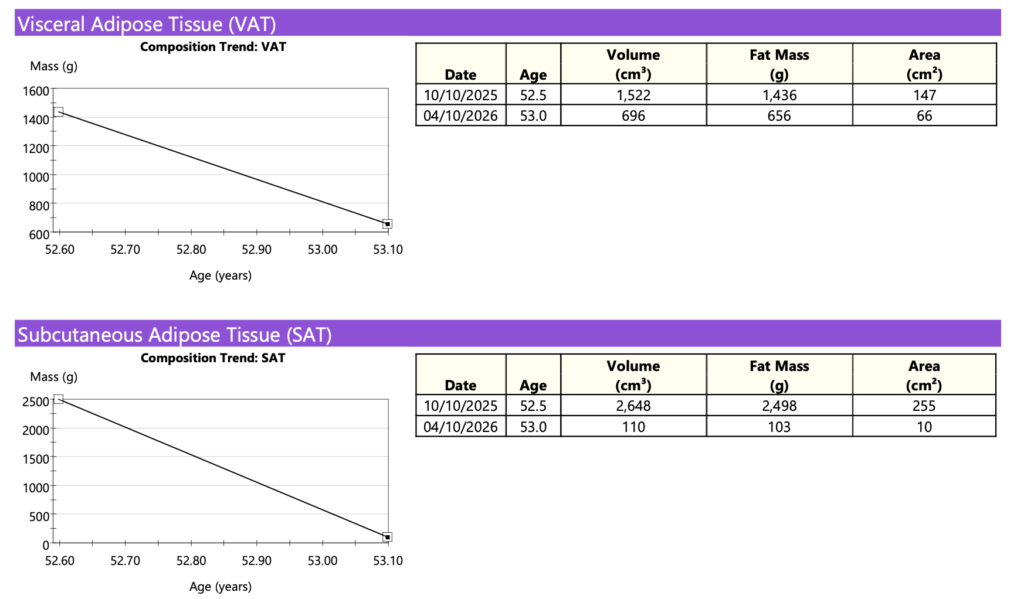
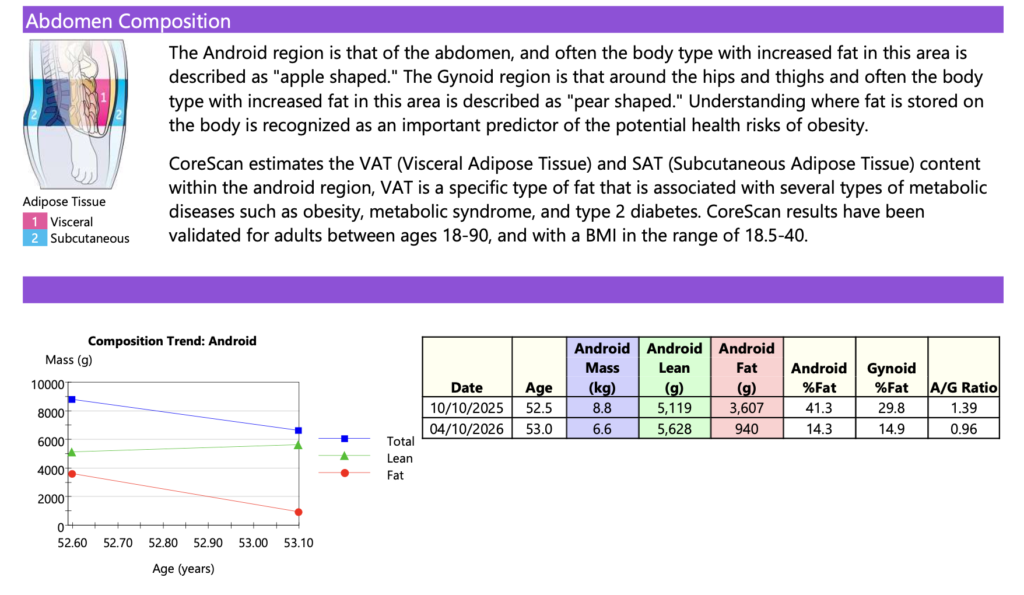
Visceral fat was the number I cared about most, and 147 down to 66 cm² is still the result I am happiest about. I wanted under 100 because the report calls that low risk.
That threshold comes from a 2002 Japanese paper (Examination Committee of Criteria for ‘Obesity Disease’ in Japan, Circulation Journal) which CT-scanned 1,193 adults at the navel and picked 100 cm² as the cut that best separated people who already had high blood sugar, bad lipids or high blood pressure from people who did not. Nobody derived it to predict who has a heart attack ten years later. A DEXA does not measure visceral fat either, it estimates it from the lower fifth of your trunk, which is how Lilly’s paper puts it: visceral fat “was estimated in this study, not calculated directly.” Researchers who hunted for the same line in NHANES data on 8,000 American adults found it again at 103 cm², then reported that their analysis “did not demonstrate a clear advantage of VAT over a simple WC or WC/height” (Potter and Friedl, American Journal of Clinical Nutrition, 2025). A tape measure did about as well as my scanner.
The android/gynoid ratio I said I wanted under 1.0 is worse off. There is no study validating 1.0 as a line, and it is the least repeatable whole-body number on the report, worse in men than women (Cheung et al., Obesity Research & Clinical Practice, 2020).
SURMOUNT-1’s placebo group lost the same share of lean mass
The fear driving people toward these scans is that GLP-1 drugs eat your muscle. The best single data point says the drug is not what sets the split. A drug that protects that tissue now exists, and apitegromab held on to lean mass without making anyone stronger.
SURMOUNT-1’s body-composition substudy (Look et al., Diabetes, Obesity and Metabolism, 2025) scanned 160 trial participants at baseline and at 72 weeks. The tirzepatide group lost 21.3% of body weight; the placebo group, which still got the lifestyle program, lost 5.3%. The finding: “The proportion of body weight reduction was 74% as fat mass and 26% as lean mass with tirzepatide, while it was 75% as fat mass and 25% as lean mass with placebo.” The same split with the drug and without it. This was Lilly’s own study, six of its eight authors Lilly employees and shareholders, which makes it more useful rather than less: the thing that defuses the panic is their own control group. (I own Lilly stock, so that is my disclosure to make.)
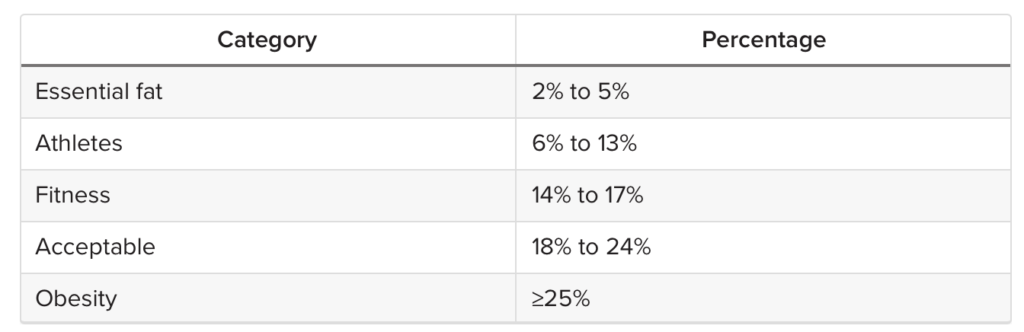
A 2026 meta-analysis of 20 randomized trials covering 15,782 people (Eisa and Barood, Diabetes, Obesity and Metabolism) lands in the same place: 25.4% of weight lost as lean mass on tirzepatide, 35.2% on semaglutide, 26.2% on lifestyle alone, and the drug-versus-lifestyle comparison at p = 0.42, which means the data are entirely compatible with no difference at all. A second 2026 review is more cautious and deserves saying out loud: Batsis and colleagues (Annals of Internal Medicine) found two thirds of drug studies exceeded the usual 25% benchmark against nearly half of the non-drug ones. The 17.5% in that first table, the number people reach for to argue lifting protects you on a GLP-1, comes from trials with no GLP-1 in them, and LEAN-PREP, the trial designed to settle it, is still a protocol with no results.
A 2026 review in the British Journal of Pharmacology concluded that “lean soft tissue loss is not a reliable predictor of muscle strength change” on these drugs, because trials found grip strength preserved while lean soft tissue fell. Its genuine worry is observational data on older adults taking semaglutide long term, where grip strength declines and sarcopenia accelerates. Across the 35 studies Batsis reviewed, “no study reported objective physical function outcomes.” Nobody was timed getting out of a chair. And in weight-loss trials with no drug in them, Villareal and colleagues (New England Journal of Medicine, 2017) had older adults with obesity lose 9% of their body weight while the resistance-training groups gave up 2 to 3% of their lean mass and got 18 to 19% stronger.
What does a DEXA scan cost, and is it worth it on a GLP-1?
Cash prices run from $59.95 for a walk-in scan with a mobile provider to about $210 at a university lab, with most single scans between $75 and $150 and two-scan packages around $60 each. The widely repeated “$39 DEXA scan” is a membership rate, not a walk-in price.
You will pay it yourself. There is no Medicare coverage determination for body-composition DXA, national or local, so it gets billed under 76499, the code for an unlisted diagnostic radiographic procedure. At least one Blue Cross plan calls it not medically necessary on the grounds that the evidence is insufficient to show it improves any health outcome. Radiation is a non-issue: roughly 10 microsieverts, about what background radiation gives you in one ordinary day at sea level (Shepherd et al., Bone, 2017).
The hardest sentence I found comes from inside the densitometry field. The International Society for Clinical Densitometry says there are few clear indications for body-composition scanning outside research, “in part because of the lack of specific documented interventions that would be affected by body composition test results, beyond usual clinical advice” (Kendler et al., Journal of Clinical Densitometry, 2013). The professional society for the machine is saying almost nothing on the report changes what you would have been told anyway.
That was true of me. Nothing on either scan changed my plan. I was already lifting, already eating the protein, already on the drug, already getting bloodwork.
Except for one page. My April report printed the WHO BMI chart with my marker at 26.2, in the yellow Overweight band, on the same sheet of paper as a measured body fat of 15.6%. Same man, same morning, same report. I drew it out, because it is faster to look at than to argue about.
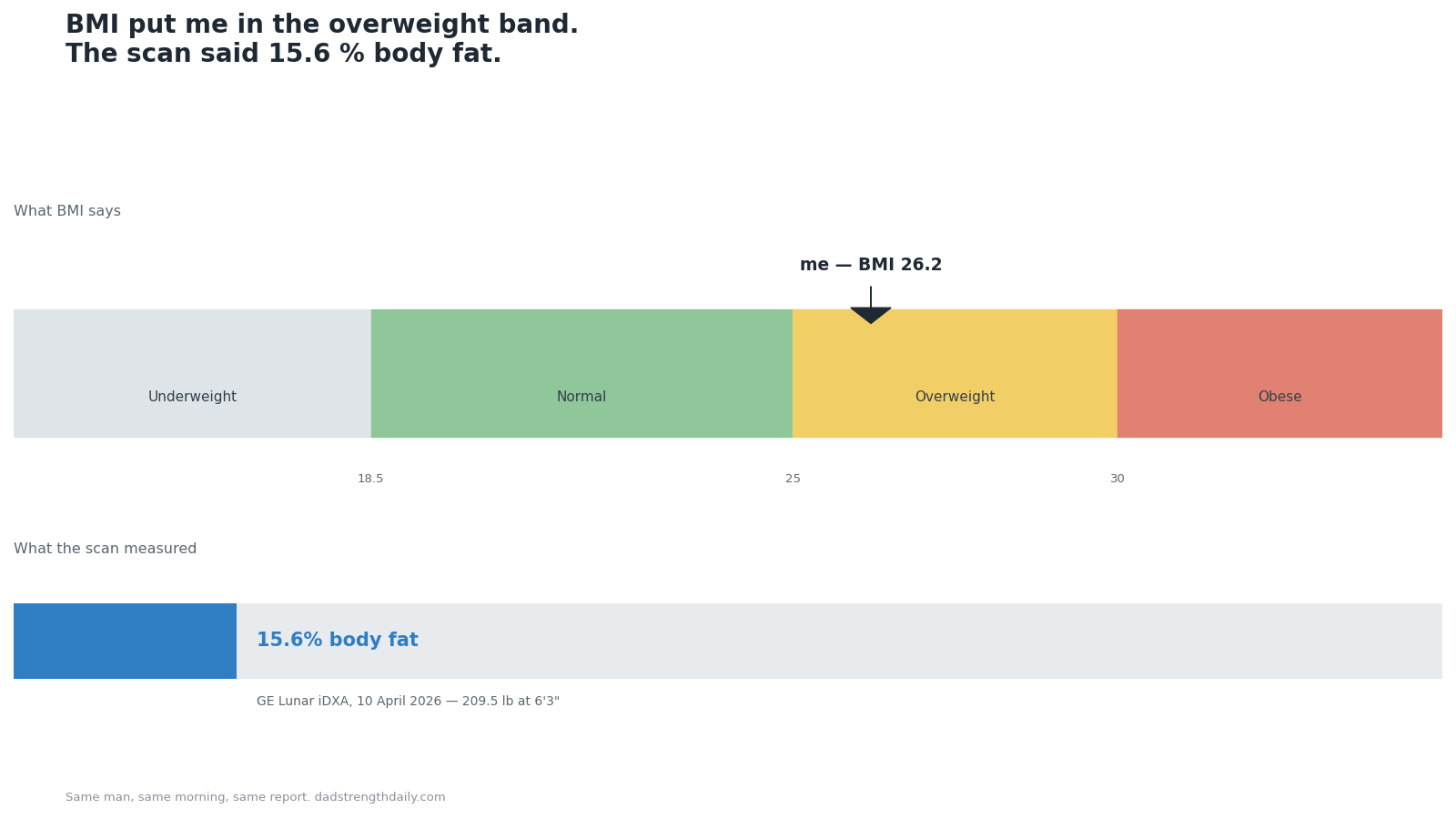
Being called overweight while a scan of your own tissue says 15.6% is what BMI does to a tall man carrying any muscle. At 373 pounds nobody needed a chart to tell me anything. At 210, the chart and my body give different answers.
The scan never once told me to do something I was not already doing, and I would still pay for the next one, because a report that measured my actual tissue is the only document I own that can argue with a BMI chart.
Note: This is my personal experience, not medical advice. I am a 53-year-old man sharing my own DEXA results during physician-prescribed Zepbound and TRT. Talk to your clinician before making medication, diet, or training decisions.
I keep a running tracker of every GLP-1 and incretin drug, approved and still in the pipeline, with what each one targets, how far along it is, and what's coming next.
See the full GLP-1 Pipeline Tracker →Get the next one in your inbox
I cover the latest GLP-1 trials and access changes weekly. Free, no spam, unsubscribe whenever.