
Wholesale whey protein has gone up fivefold in three years, and some suppliers are sold out for the rest of the year. Here’s how people on weight-loss shots repriced a cheese byproduct, and what to put in your shaker while it lasts.
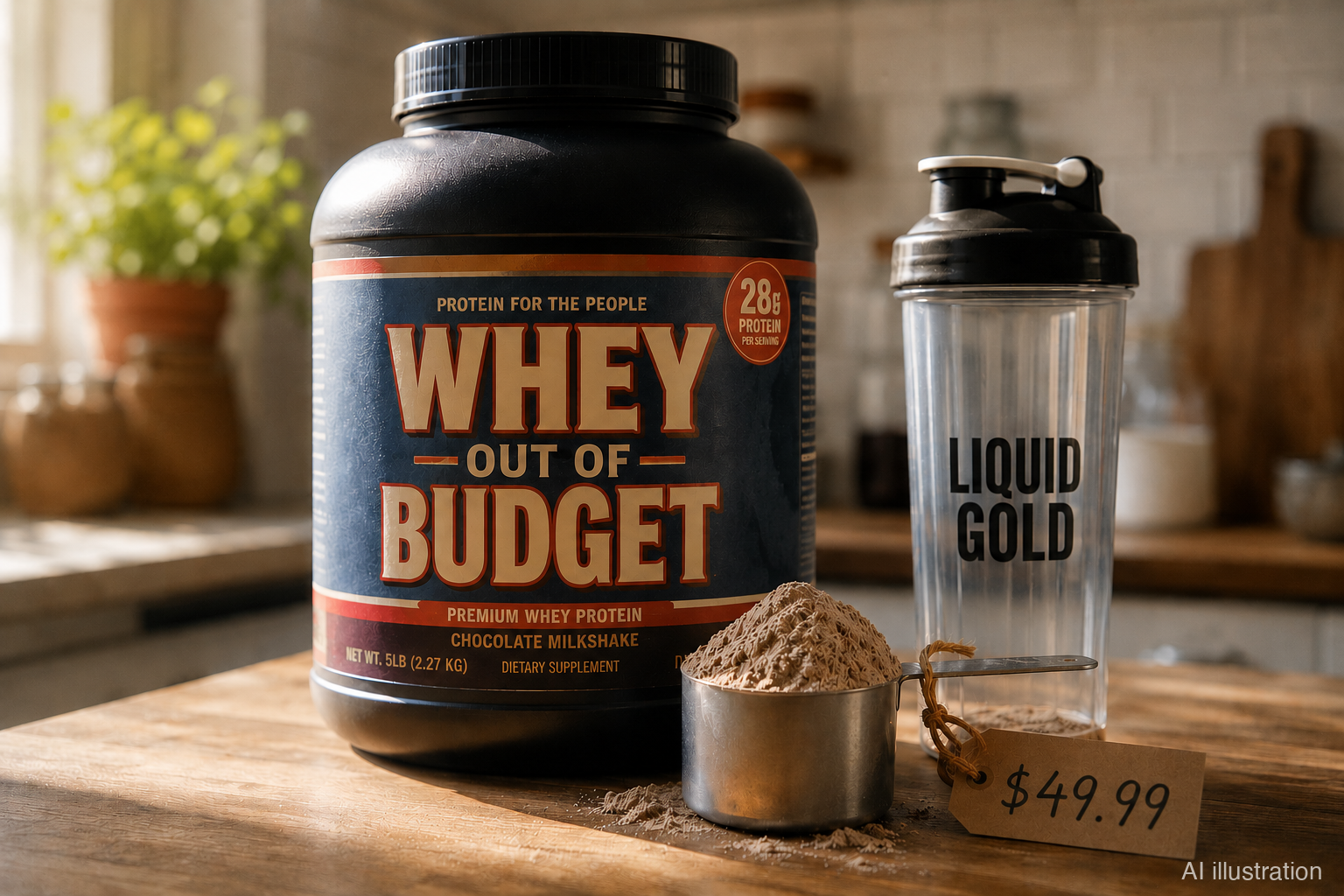
I’m on Zepbound, I track my protein in MacroFactor, and like every other GLP-1 user who’s read anything about muscle loss, I treat my daily protein number as non-negotiable. Eat less of everything, but more of this. That’s the standard advice, and it’s good advice. Most days a chunk of mine arrives as whey powder from a tub.
Here’s the part I didn’t see coming: millions of people following that same advice at the same time just repriced the global whey market. The Guardian reported this morning that wholesale whey protein has risen fivefold in three years, and industry analysts are openly using the word shortage. And there’s a stranger layer the health press hasn’t touched: whey comes from cheesemaking, and the same drug driving whey demand has households buying less cheese. I pulled the USDA dairy data and the Cornell grocery study to see if that holds up. It mostly does.
Fivefold in three years
Get the next one in your inbox
I write about longevity, training, and preventive health weekly — without the guru worship. Free, no spam, unsubscribe whenever.
The headline number comes from Vesper, a dairy commodity data firm. A tonne of WPC80, whey protein concentrate at 80 percent protein, the high-protein grade most supplement powders are built on, cost about £4,300 in June 2023. This month it’s £23,751. That’s not a typo. It’s three years of demand growing into a supply that mostly can’t move.
The American numbers tell the same story. USDA’s Dairy Market News for the first week of June has WPC80 trading in the mid-$12s to $13 a pound, whey protein isolate (the more filtered, lower-lactose grade) around $14, and the mid-grade WPC34 that goes into bars and packaged food up nearly 83 percent over two years. USDA describes inventories as “tight with little to no spot load availability.” Translated: a brand that suddenly needs more powder has nowhere to buy it. Per the Guardian’s read of the same USDA reporting, some suppliers are already sold out for the rest of 2026, and one manufacturer is expected to stop making WPC34 altogether after the summer.
BellRing Brands, the company behind Premier Protein, is telling investors whey costs are at historic highs (Grocery Dive has the rundown), and the founder of one small UK protein brand told the Guardian she’s buying at double last quarter’s cost and “fighting for stock allocation” against bigger players.
GLP-1s didn’t start the protein boom. Seven in ten Americans now say they want more protein in their diet, up from about six in ten four years ago, and the high-protein label was spreading across the grocery store before the shots took off. But the drugs added tens of millions of people with a medical reason to chase a specific daily number, and that’s a different kind of demand. It doesn’t ease off when the trend cycle moves on.
You can’t make more whey without making more cheese
Whey isn’t manufactured on demand, which took me a minute to appreciate. It’s the liquid left over when milk gets separated into curds during cheesemaking. The world’s whey supply is set by the world’s cheese production, and nobody builds a cheese plant because protein powder got expensive.
You can see the real bottleneck right in the USDA price sheet. Plain dry whey, the commodity grade that goes into animal feed and baked goods, still costs about 67 cents a pound. WPC80 costs around thirteen dollars. Raw whey is cheap and mostly water; the expensive part is the specialized filtration that concentrates it into high-protein powder, and that capacity is what the industry actually ran out of. Producers are reshuffling every available gallon toward the high-protein end because that’s where the money is.
New filtration capacity is being built. The US dairy industry says about $11 billion in new processing is going up across 19 states, and European producers are expanding too. But these plants take years, not quarters. Realistic relief lands in late 2026 at the earliest, more likely 2027.
So there are really two walls. The one the industry hit first is filtration, and the new plants fix that by 2027. The wall behind it is the raw whey stream itself, which only grows if cheesemaking grows. And that’s where this story gets strange.
The drug squeezes the market from both ends
You’d think the fix is simple: high whey prices encourage more cheesemaking, more cheese means more whey, problem solves itself. Except the same drug driving whey demand is undercutting cheese demand.
A Cornell team matched roughly 2,600 GLP-1 households inside a 150,000-household purchase panel and tracked what actually changed in their carts in a study published in December in the Journal of Marketing Research. Grocery spending fell 5.3 percent in the first six months on the drug. Chips and savory snacks dropped 10.1 percent. And cheese fell about 6 percent, one of the four biggest declines of the forty categories they measured, a drop that was still there a full year in. The only grocery category that significantly went up? Yogurt.
That’s the part that got me. People like me are buying less cheese while driving up demand for the whey that comes from making it, so cheesemakers are being asked to expand production of something their own customers want less of. I’ve read a lot of supply chain stories and I can’t think of another one shaped quite like this.
And the buyer pool keeps growing. KFF’s latest tracking poll found 12 percent of American adults currently taking a GLP-1, and 18 percent have tried one. Most new prescriptions come with some version of the advice I got: lift, and eat more protein than you think you need. I’ve written about what that protein target looks like in practice and about the drugs being developed to protect muscle directly. Even if only a slice of those thirty million chase the target with powder, that keeps steady pressure under whey demand.
What to put in the shaker while this lasts
You will probably never see an empty whey shelf. Vesper’s own analyst told the Guardian the market is “still finding a home for the product,” which is commodity-speak for prices rising until somebody drops out. And a fivefold move in wholesale WPC80 doesn’t mean a fivefold tub price, because flavoring, packaging, retail margin, and brand markup make up most of what you pay at the shelf. What you’ll see is quieter: smaller tubs, higher prices, and reformulated blends where some of the whey is swapped for milk protein. The label math is worth checking now in a way it wasn’t a year ago. Grams of protein per serving, cost per serving, and whether the ingredient list quietly changed.
About those blends, because the supplement world is going to spend the next year sneering at them: a blend is not a downgrade, as long as the total protein and leucine still get you there. Milk protein concentrate is roughly 80 percent casein and 20 percent whey. Casein digests slower, which makes it different, not inferior, and at a 30 or 40 gram serving the muscle-building difference between a blend and pure whey is too small to care about. The Vesper analyst noted the ingredient cost can be a third of whey’s right now. If your favorite brand quietly reformulates, that’s them keeping the price sane, not cutting your dose.
Beyond the blend question, look hard at whether you need isolate. I say this as someone holding a tub of it. Isolate takes the most filtration of anything in the market, which makes it the most repriced, and its real advantage over concentrate is lower lactose. If dairy doesn’t bother your gut, an 80 percent concentrate at the same daily protein builds the same muscle for meaningfully less money, and that gap is about to widen.
And remember that powder was always the convenience option, not the requirement. Greek yogurt is having a moment for good reason (it was the one grocery category GLP-1 users bought more of). Cottage cheese is in the middle of its own high-protein boom. Eggs, canned fish, and plain old meat were never part of this squeeze. Soy and pea protein are legitimate if you tolerate them better; total daily protein still matters most, but as a per-shake check aim for roughly 2 to 3 grams of leucine per serving, which with pea protein usually means running the scoop a little bigger.
What I’m actually doing: nothing dramatic. I keep two whey proteins in rotation, Legion’s Whey+ isolate when I’m being deliberate and the big Optimum Nutrition Gold Standard tub from Costco when I’m being practical (no affiliate links here, I just buy the stuff). The Costco habit stays. I’ll probably let the isolate go if the next price jump is ugly, and more of my protein target is getting hit with Greek yogurt and chicken than a year ago anyway. The one thing I’d skip is panic-buying tubs because a supplement blog told you to. Several of them are running shortage content that ends in a checkout link, which tells you what that content is for. New filtration plants come online through 2027. Until then I’m buying on cost per gram of protein, whatever the front of the tub says.
About Gunnar
Gunnar is 53. He lost about 170 pounds, trains in a garage gym, and writes DadStrengthDaily from personal experience, citing primary sources where he can. He also moderates r/ProactiveHealth. He is not a doctor, and nothing here is medical advice. Talk to your own doctor before acting on anything, especially GLP-1s, TRT, blood pressure, sleep apnea, and cancer screening.